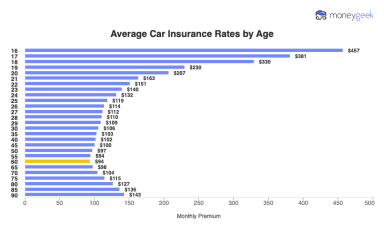

I have spent nearly a decade analyzing car insurance rates and one thing is always true: there is no single cheapest company for every driver. Insurers price the same driver profile very differently, and the gap between the cheapest and most expensive option for the same coverage can exceed $200 per month. The tables below cover every major driver profile so you can find the lowest rate for your specific situation.
Cheapest Car Insurance Companies for 2026
GEICO has the cheapest policy overall with an average rate of $43 for minimum liability coverage. Travelers has the cheapest car insurance for full coverage at $97 per month. Progressive, State Farm and Nationwide also rank among the cheapest insurers depending on your driver profile.
Get the most affordable car insurance quotes below.

Updated: May 1, 2026
Advertising & Editorial Disclosure
Summary: The Cheapest Car Insurance Companies for May 2026
- Full coverage: Travelers at $97 per month
- Minimum coverage: GEICO at $43 per month
- Teens (16–19): National General at $210 per month
- Young adults (20–24): National General at $88 per month
- Seniors (65+): GEICO at $83 per month
- Speeding ticket: State Farm at $56 per month
- At-fault accident: State Farm at $62 per month
- DUI: National General at $66 per month
- Texting while driving: GEICO at $55 per month
- Not-at-fault accident: GEICO at $45 per month
- Good credit: Travelers at $97 per month
- Poor credit: Nationwide at $165 per month
Why You Can Trust MoneyGeeks Data and Advice
- Comprehensive data: Our rate analysis covers every residential ZIP code in the United States, pulling from millions of quotes across 70 insurers. See our auto insurance methodology for a full breakdown.
- Editorial independence: Our recommendations are independent of our insurance company partnerships. See our editorial standards.
- Written by a licensed agent: Mark Fitzpatrick is a Licensed Property and Casualty Insurance Producer with nearly a decade of insurance market analysis.
- Reviewed by an industry expert: Mark Friedlander of the Insurance Information Institute is one of the most cited insurance experts in the United States.
MoneyGeek pulls rate data from Quadrant Information Services across every residential ZIP code in the U.S. The base profile is a 40-year-old man with a clean record driving a 2010 Toyota Camry LE 12,000 miles per year. Minimum coverage rates reflect each state's required liability limits. Full coverage uses 100/300/100 liability with a $1,000 comprehensive and collision deductible. Age, violation and credit sections substitute the relevant characteristic for the base profile while everything else stays constant. Teen rates reflect a 16- to 19-year-old, DUI rates add that conviction, and bad-credit rates use a sub-580 score. Rankings within each section score carriers on affordability (60%), customer experience (30%) and coverage options (10%). The affordability score normalizes each carrier's rate against competitors within that specific driver profile. Customer experience draws from J.D. Power surveys, NAIC complaint indexes, AM Best ratings, agent network ratings and Google Business ratings. Coverage options reflect the number and variety of add-ons each carrier offers.
Cheapest Minimum Coverage Car Insurance Companies
GEICO is the cheapest minimum coverage insurer nationwide at $43 per month, 36% below the national average. National General follows at $48, only $5 more. Both sit well below the next tier: Travelers at $50, State Farm at $53 and Amica at $56.
Minimum liability coverage is the cheapest legal option, averaging $67 per month nationally compared to $137 per month for full coverage. That $70 monthly difference is why many drivers default to minimum coverage, but it only makes financial sense in specific situations.
Minimum liability coverage pays for damage and injuries you cause to others in an at-fault accident. It does not pay for damage to your own vehicle. It works best for drivers who own their car, can afford to repair it out of pocket and have assets below $50,000. If you are financing or leasing, minimum coverage is not an option because your lender requires full coverage. And if your assets are significant, minimum limits leave you personally responsible in a serious accident. See our guide to how much car insurance you need.
| Geico | $43 | $514 | 36% |
| National General | $48 | $579 | 28% |
| Travelers | $50 | $601 | 25% |
| State Farm | $53 | $634 | 21% |
| Amica | $56 | $669 | 17% |
Regional insurers take the top spot in 24 of 51 states for minimum coverage, more than any national insurer. If you only compare GEICO and State Farm you may be missing your cheapest option. Farm Bureau, Westfield and Farmers Mutual of Nebraska all lead multiple states and regularly undercut national brands by 20 to 30 percent in their markets.
Use the table below to find the cheapest minimum coverage insurer in your state.
Alabama AIG $22 $268 60% Alaska Geico $40 $481 14% Arizona Travelers $45 $546 34% Arkansas Farm Bureau $32 $384 34% California Geico $39 $465 43% Colorado American National $27 $326 54% Connecticut Geico $35 $419 60% Delaware Travelers $46 $551 57% District of Columbia Chubb $29 $352 70% Florida Travelers $51 $616 46% Georgia Geico $42 $498 48% Hawaii Geico $24 $292 32% Idaho State Farm $18 $210 52% Illinois Geico $31 $368 40% Indiana Hastings Insurance $30 $364 27% Iowa State Farm $19 $231 42% Kansas Geico $26 $309 45% Kentucky Travelers $47 $560 40% Louisiana Geico $55 $659 48% Maine MMG Insurance $27 $330 29% Maryland Geico $49 $586 45% Massachusetts Plymouth Rock Insurance $22 $267 51% Michigan Travelers $23 $277 64% Minnesota Westfield Insurance $19 $231 57% Mississippi Farm Bureau $33 $402 42% Missouri Auto Owners $34 $402 47% Montana State Farm $18 $220 63% Nebraska Farmers Mutual Ins Co of NE $18 $216 55% Nevada Travelers $57 $686 31% New Hampshire Safety Insurance $31 $371 31% New Jersey Plymouth Rock Insurance $67 $806 34% New Mexico Central Insurance $31 $368 40% New York NYCM Insurance $25 $305 60% North Carolina State Farm $24 $289 52% North Dakota North Star Insurance $25 $295 40% Ohio Auto Owners $27 $318 38% Oklahoma Progressive $28 $331 50% Oregon State Farm $38 $455 32% Pennsylvania Westfield Insurance $20 $234 61% Rhode Island State Farm $42 $500 43% South Carolina American National $34 $413 50% South Dakota Farmers Mutual Ins Co of NE $13 $157 60% Tennessee Farm Bureau $27 $319 45% Texas State Farm $41 $489 41% Utah Geico $48 $573 33% Vermont Co-operative Insurance $16 $189 48% Virginia Travelers $30 $365 43% Washington State Farm $37 $442 30% West Virginia Westfield Insurance $30 $362 47% Wisconsin Geico $21 $249 44% Wyoming Geico $14 $169 47% State minimum coverage keeps you legal but was not designed to fully protect most drivers. Most states require only $25,000 to $50,000 in bodily injury liability per person, and accidents can often exceed these liability limits. Anything beyond your limit comes out of pocket, including legal judgments if the other driver sues.
The step up from state minimums costs less than most drivers expect. A 50/100/50 policy doubles or triples your liability protection for $5 to $10 more per month at most insurers. Moving to 100/300/100 adds another $10 to $20 per month, making incremental liability coverage inexpensive.
79% of drivers who get quotes through MoneyGeek choose full coverage over minimum liability. Minimum liability costs less but leaves you paying out of pocket for damage to your own vehicle after an at-fault accident. Full coverage adds comprehensive and collision protection, meaning your insurer covers your car if you cause an accident, if it is stolen, if it is damaged in a storm or if you hit an animal.
Three questions decide it. Is your car financed or leased? Full coverage is required. Can you afford to replace it out of pocket if it is totaled? If not, get full coverage. Is it worth less than $5,000? If so, minimum coverage usually makes more financial sense.
Cheapest Full Coverage Car Insurance Companies
The cheapest full coverage car insurance nationwide is from Travelers at $97 per month, 29% below the national average of $137. GEICO follows at $98 monthly. Both save drivers over $460 per year compared to the national average.
GEICO's $1 gap behind Travelers closes fast depending on your profile. Its military and federal employee discounts cut 12 to 15 percent off the base rate. Multi-vehicle households save up to 25 percent and clean-record drivers save up to 26 percent through the good driver discount. Stack those and GEICO's effective rate can fall well below Travelers' base despite starting $1 higher.
| Travelers | $97 | $1,158 | 29% |
| Geico | $98 | $1,177 | 28% |
| National General | $112 | $1,340 | 18% |
| Amica | $115 | $1,381 | 16% |
| State Farm | $121 | $1,448 | 11% |
GEICO leads full coverage pricing in 16 states and Travelers in 10, but regional carriers take the top spot in 19 states. In our analysis that is the finding most drivers miss. NYCM leads New York at $60 monthly, 51% below the state average. Grange leads Indiana at $65. AIG leads Alabama at $72. Drivers who only compare national brands in those states are leaving significant savings on the table.
How much shopping pays off also varies by state. In Delaware and Colorado the cheapest carrier sits 52 to 59 percent below the state average, meaning the savings are large and the main task is simply finding the right carrier. In Washington and West Virginia rates cluster so tightly that your ZIP code and deductible choice will move your rate more than carrier selection alone.
Use the table below to find the cheapest full coverage insurer in your state.
Alabama AIG $72 $864 33% Alaska Geico $89 $1,070 23% Arizona Travelers $93 $1,120 36% Arkansas Farm Bureau $90 $1,085 28% California Progressive $91 $1,087 35% Colorado American National $77 $920 52% Connecticut Geico $77 $920 50% Delaware Travelers $77 $926 59% District of Columbia Erie Insurance $113 $1,354 42% Florida Travelers $116 $1,388 50% Georgia Auto Owners $101 $1,208 30% Hawaii Geico $66 $797 25% Idaho Geico $55 $656 34% Illinois Geico $71 $848 35% Indiana Grange Insurance $65 $783 26% Iowa Travelers $68 $810 33% Kansas Geico $74 $884 40% Kentucky Travelers $98 $1,173 31% Louisiana Geico $165 $1,982 35% Maine Travelers $55 $658 32% Maryland Geico $86 $1,032 45% Massachusetts Plymouth Rock Insurance $65 $775 40% Michigan Geico $72 $864 48% Minnesota Auto Owners $75 $902 31% Mississippi Farm Bureau $89 $1,074 30% Missouri Auto Owners $83 $991 37% Montana State Farm $78 $936 37% Nebraska Auto Owners $72 $861 36% Nevada Travelers $111 $1,326 32% New Hampshire MMG Insurance $65 $778 26% New Jersey NJM Insurance $110 $1,320 37% New Mexico Geico $97 $1,160 22% New York NYCM Insurance $60 $722 51% North Carolina State Farm $59 $712 47% North Dakota Geico $59 $706 37% Ohio Geico $71 $850 26% Oklahoma Progressive $95 $1,135 33% Oregon Country Financial $72 $867 35% Pennsylvania Travelers $68 $819 46% Rhode Island Quincy Insurance $85 $1,017 37% South Carolina American National $68 $814 51% South Dakota Progressive $54 $647 50% Tennessee Auto Owners $77 $930 27% Texas State Farm $100 $1,197 38% Utah Geico $98 $1,171 29% Vermont Co-operative Insurance $53 $637 32% Virginia Travelers $62 $743 37% Washington Progressive $100 $1,194 14% West Virginia Erie Insurance $95 $1,141 21% Wisconsin Geico $56 $677 38% Wyoming American National $61 $736 30%
Cheapest Car Insurance Companies for Teens
Teen rates are the highest of any age group and the cheapest insurer changes at almost every age during teen years. State Farm is cheapest for 16-year-olds at $271 per month, 22% below the national average. By age 19, National General is cheapest at $118 per month, 29% below average.
How to save on teen car insurance:
- Stay on a parent's policy. Staying on a family policy at the same address is almost always cheaper than a standalone policy through the early 20s.
- Stack State Farm discounts. The good student discount saves 15 to 25 percent for teens maintaining a B average and stacks with Steer Clear for drivers under 25 with clean records.
- Compare at every renewal. The cheapest insurer shifts significantly between 16 and 19 as the teen builds a record. The carrier that is cheapest at 16 is rarely cheapest at 19.
State Farm is the cheapest car insurance company for 16-year-old drivers when added to a family policy, with rates at $271 monthly for minimum coverage and $529 monthly for full coverage. State Farm's edge widens further for students with a B average or better. It's good student discount runs 15% to 25% and stacks with Steer Clear, a telematics program for drivers under 25 with no at-fault accidents or violations in the past three years, pushing State Farm's effective rate below the $271 base for qualifying drivers.
Amica charges 16-year-olds $280 monthly for minimum coverage, just $9 more than State Farm, and can lower rates for families who bundle home and auto, as its multi-policy discount can close the gap with State Farm for some profiles.
State Farm $271 $529 22% Amica $280 $561 18% National General $289 $617 12% Geico $312 $650 6% Travelers $323 $626 7% National General is the cheapest auto insurance company for 17-year-olds, with minimum coverage at $226 monthly and full coverage at $468, with GEICO closely behind at $237 and State Farm at $238. The four carriers sit within $26 of each other, but the savings gap versus the national average remains narrow, at 6% to 11%, meaning discount stacking still drives a larger share of the final rate than carrier selection alone.
National General, GEICO, and State Farm are separated by $12 at this age, making the teen's driving record and existing policy relationships the deciding factors. GEICO and State Farm both offer good student discounts that stack with multi-vehicle savings, giving families already insured with either carrier a practical path to matching National General's base rate. National General prices more aggressively for teens with a violation or a non-standard risk profile. Adding a 17-year-old to a parent's policy warrants quotes from all three before assuming the current carrier is the cheapest option.
National General $226 $486 10% Geico $237 $502 7% State Farm $238 $468 11% Travelers $252 $494 6% GEICO is the cheapest car insurance company for 18-year-olds at $205 monthly for minimum coverage, but the four carriers in this table sit within $7 of each other, an $84 annual spread that makes discount eligibility more decisive than base rate. That is the tightest cluster of any teenage group, and it means the base rate difference between first and fourth place is $84 annually. Discount eligibility and existing policy relationships will determine the actual cheapest option more reliably than the table alone.
Travelers at $209 is worth quoting for drivers who don't qualify for GEICO's student discounts, as it consistently prices full coverage $22 less than GEICO's $437, making it the stronger option for drivers who need full coverage on a financed vehicle and don't qualify for GEICO's student discounts.
National General remains the default for any 18-year-old with a violation or a non-standard risk profile. State Farm's good student and Steer Clear stack still applies at 18 and can push its $212 base below GEICO's for qualifying drivers.
Geico $205 $437 8% Travelers $209 $415 10% National General $210 $459 4% State Farm $212 $420 9% National General is the cheapest car insurance provider for 19-year-olds, with average rates of $118 monthly for minimum coverage, $47 less than GEICO at $147 and 29% below the national average. That gap reflects how standard carriers price 19-year-olds more conservatively, while National General continues to compete aggressively for young drivers building their first independent record.
GEICO's $47 gap closes for 19-year-olds with a clean record, good grades, and an existing family GEICO policy where multi-vehicle and good student discounts stack. Those two discounts combined can cut GEICO's $147 base to roughly $100 to $110 monthly, bringing it within range of National General's $118. Start with National General, then run a GEICO quote if either discount applies.
National General $118 $275 29% Geico $147 $321 15% Travelers $165 $327 11% State Farm $179 $358 3%
Cheapest Car Insurance Companies for Young Adults
National General is the cheapest car insurance company for young adults at $88 per month for minimum liability, 29% below the national average. GEICO follows at $94 per month and Travelers at $115. Young adult rates drop 30 to 50 percent from teen levels but remain well above what the same driver pays in their 30s and 40s.
National General has cheaper rates through age 23 but one thing worth knowing: its customer service and claims satisfaction scores, are not as strong as GEICO's. If price is your only consideration National General is the right call. If you expect to file a claim or want stronger support and better online app, then choose GEICO.
Staying on a parent's policy at the same address remains cheaper than a standalone policy for most drivers through their early-20s. A separate policy becomes necessary when the driver moves out of the house full time.
National General is the cheapest auto insurance provider for 20-year-olds, at $117 monthly for minimum coverage, 23% cheaper than the national average. GEICO follows at $132, Travelers at $148, and State Farm at $159. The $42 monthly spread between National General and State Farm is the widest of any age in the young adult range, making carrier selection more impactful here than discount stacking alone.
National General $117 $273 23% Geico $132 $288 17% Travelers $148 $294 12% State Farm $159 $321 5% The cheapest car insurance provider for 21-year-olds is National General at $89 monthly for minimum coverage, 36% cheaper than the national average, with the $34 spread between first and third place making carrier selection more impactful than discount stacking at this age. Travelers at $123 and GEICO at $101 round out the top three.
GEICO's good student discount can bring its $101 base to roughly $76 to $81 monthly for full-time students with a B average, making it competitive with National General's base rate for that profile.
National General $89 $177 36% Geico $101 $224 22% Travelers $123 $244 12% National General remains the cheapest car insurance option for 22-year-olds at $87 monthly for minimum coverage, but the gap with GEICO has narrowed to $7, down from $12 at 20 and 21, as two clean years of driving begin registering in standard carrier pricing.
GEICO's good student discount runs 15% to 25% at age 22, bringing its $94 base to roughly $71 to $80 monthly for full-time students with a B average. That range overlaps with National General's $87 base, making GEICO competitive for the right profile at this age for the first time in the young adult range.
National General $87 $174 31.23% Geico $94 $208 20.32% Travelers $114 $227 9.96% National General and GEICO are the cheapest car insurance companies for 23-year-olds, separated by $4 at 23: the cheapest car insurance comes from National General at $80 monthly, with GEICO at $84, the tightest the two carriers have been across the entire teen and young adult range.
State Farm is at $113 at this age but sits exactly at the national average, offering no base rate advantage without discount stacking. The $4 gap between National General and GEICO is narrow enough that GEICO's good student and multi-vehicle discounts can flip the order for the right profile. Run a GEICO quote alongside National General before defaulting to either.
National General $80 $161 31% Geico $84 $184 24% Travelers $108 $215 8% State Farm $113 $236 0% At 24, the cheapest car insurance comes from both GEICO and National General, tied at $80 monthly for minimum coverage, the first time a standard carrier has matched National General's rate across the entire teen and young adult range.
National General is the cheapest for full coverage at $160 monthly, versus GEICO's $175, a $15 gap that matters for drivers carrying a loan or lease who need comprehensive and collision. The tie on minimum coverage marks the point where four years of clean driving have fully closed the pricing gap between standard and non-standard markets. GEICO's discount stack gives it a practical edge beyond the tied base rate for 24-year-olds with multi-vehicle savings or active student status.
Geico $80 $175 24% National General $80 $160 28% Travelers $102 $203 9% State Farm $104 $220 3%
Cheapest Car Insurance Companies for Seniors
GEICO has the cheapest car insurance for seniors at $83 per month for minimum coverage, 13% below the national average. For full coverage National General is cheapest at $167 per month, $4 less than GEICO's $171. The right choice depends on how often you file claims. GEICO's digital model keeps costs low but scores below average on claims satisfaction.
Rates for seniors begin rising again around 70 as accident frequency increases. And seniors who drive fewer than 7,500 miles per year can offset part of that increase with GEICO's low-mileage discount or Progressive's Snapshot program. Mature driver discounts and bundling home and auto are also worth asking about at renewal since many seniors qualify for both and rarely apply them.
| Geico | $83 | $171 | 13% |
| Amica | $89 | $187 | 6% |
| National General | $90 | $167 | 12% |
| State Farm | $95 | $189 | 3% |
Cheapest for Drivers With Violations or Bad Credit
A speeding ticket, at-fault accident, DUI or texting violation raises your rates because insurers price the increased risk directly into your premium. But the rate increase varies by insurer. The company that was cheapest with a clean record is often not the cheapest after a violation, and shopping around after any incident can save $400 to $900 per year.
In our analysis the insurer with the lowest rate depends on the violation type. State Farm is most forgiving after a speeding ticket or at-fault accident. National General leads after a DUI. GEICO is cheapest after a texting violation and a not-at-fault accident. Defaulting to your current insurer after a violation is the most common and most expensive mistake we see drivers make at renewal.
Nationwide is the cheapest insurer for drivers with bad credit at $165 per month for minimum coverage, 29% below the national average for this profile. Poor credit below a 580 score raises rates roughly 100% compared to drivers with good credit in most states because insurers use credit-based scoring as a risk indicator. Moving from poor to good credit is one of the highest leverage rate reductions available, often cutting premiums by $50 to $100 per month without changing your coverage. California, Hawaii and Massachusetts prohibit this practice, so drivers in those states pay the same rate regardless of credit.
State Farm/GEICO | $56 | $131/$132 | 25%/24% cheaper | |
State Farm | $62 | $137 (Travelers) | 27% cheaper | |
National General | $66 | $158 (Travelers) | 29% cheaper | |
GEICO | $55 | $126 | 29% cheaper | |
GEICO | $45 | $103 | 29% cheaper | |
Nationwide | $165 | $164 | 29% cheaper |
State Farm and GEICO both have the cheapest car insurance companies after a speeding ticket at $56 monthly for minimum coverage, 25% and 24% below the national median respectively. Travelers has the lowest full-coverage rate at $129 per month, 23% below the national median.
A speeding ticket stays on your record and affects your rates for three to five years depending on your state, adding $20 to $40 monthly at most standard carriers. State Farm offers a first-ticket program that limits the rate impact and keeps its surcharge lower than most competitors. Check whether you qualify before your next renewal, as the program applies at renewal rather than mid-term.
State Farm $56 $131 25% Geico $56 $132 24% Travelers $63 $129 23% National General $68 $153 11% Amica $69 $142 15% State Farm has the cheapest minimum coverage after an at-fault accident at $62 monthly, 27% below the national median. Travelers leads on full coverage at $137 monthly, 26% below the national median. Only $4 separates State Farm and GEICO for minimum coverage, and State Farm is the stronger option for drivers who need full coverage on a financed vehicle after a claim.
An at-fault accident can raise rates for three years or more at most carriers. State Farm absorbs at-fault drivers into its standard risk pool rather than routing them to a high-risk tier, which keeps its $62 post-accident rate lower than those of specialty carriers, which apply larger surcharges. Travelers leads on full coverage post-accident at $137 monthly, 26% below the national median. If your current insurer raised rates more than 30% after the accident, compare quotes before your next renewal.
State Farm $62 $141 27% Geico $66 $153 21% Travelers $69 $137 26% Amica $71 $144 23% National General $78 $163 14% National General has the cheapest car insurance after a DUI at $66 monthly for minimum coverage, 29% below the national median. State Farm and Travelers follow at $73 and $78 monthly. For full coverage, Travelers leads at $158 monthly, 36% below the national median, with State Farm close behind at $159.
A DUI raises rates 40% to 80% and stays on your driving record for three to 10 years depending on your state laws. Many states require an SR-22 certificate after a DUI, a form your insurer files with the state confirming you carry the required minimum coverage. SR-22 filing fees range from $15 to $50 per year, and National General and State Farm both file SR-22s, which matters because not all carriers do. GEICO charges $102 monthly after a DUI, 55% more than National General's $66, making carrier selection the single biggest rate lever after a DUI conviction.
National General $66 $197 29% State Farm $73 $159 37% Travelers $78 $158 36% Progressive $83 $161 34% Geico $102 $231 10% GEICO has the cheapest car insurance after a texting while driving violation at $55 monthly for minimum coverage, 29% below the national median. State Farm charges $58 monthly. For full coverage, GEICO leads at $126 monthly and State Farm charges $132.
Insurers penalize texting violations differently. GEICO and State Farm treat texting violations similarly to speeding tickets, keeping their rates at $55 and $58 monthly, respectively. Chubb applies the highest surcharge in this table at $71 monthly, 29% more than GEICO, reflecting how some carriers weigh distracted driving risk more heavily than moving violations. Comparing quotes after a texting violation can save more than after a speeding ticket at carriers that price the two events differently.
Geico $55 $126 29% State Farm $58 $132 25% National General $65 $146 17% Travelers $69 $138 18% Chubb $71 $166 7% GEICO has the cheapest car insurance after a not-at-fault accident at $45 monthly for minimum coverage, 29% below the national median. State Farm charges $51 monthly and Travelers $54. Most insurers still raise rates after not-at-fault accidents, but GEICO keeps increases lower than those of most competitors. GEICO is also the most affordable insurer for full coverage at $103 monthly, with Travelers at $107. The $4 gap between them is narrow enough that Travelers' IntelliDrive telematics discount can close it for safe drivers enrolled in the program.
Geico $45 $103 29% State Farm $51 $121 18% Travelers $54 $107 24% National General $55 $117 18% Amica $56 $115 19% Nationwide has the cheapest car insurance for drivers with bad credit at $165 monthly for minimum coverage and $164 for full coverage, 29% below the national average. Farmers costs $179 monthly for liability and $203 for full coverage, 17% below average. GEICO costs $183 monthly for minimum coverage, but its full coverage rate of $195 is 18% below average, nearly matching Farmers' discount on full coverage despite higher liability costs.
Nationwide $165 $164 29% GEICO $183 $195 18% Farmers $179 $203 17% Travelers $190 $208 14% Allstate $214 $227 4% How Much Do Car Insurance Companies Penalize Bad Credit?
In states where credit-based insurance scoring is legal, poor credit below a 580 score raises premiums by roughly 100% compared to drivers with good credit. California, Hawaii, and Massachusetts prohibit insurers from using credit scores in rate calculations entirely. In every other state, Nationwide's $165 rate for bad-credit drivers is 29% below the national average, but the 100% surcharge means even Nationwide's discounted rate is roughly double what a clean-credit driver pays for the same coverage. Improving your credit score is one of the most effective long-term ways to lower your car insurance rate outside of those three states.
How to Get The Cheapest Car Insurance Rates
After nearly a decade analyzing car insurance rates the single most consistent finding is that identical coverage from different insurers can vary by thousands of dollars for the same driver. Our shopping data shows that the gap in rates between the cheapest and most expensive insurer ranges from $1,200 to $8,500, depending on your profile. The right carrier combined with strategic discount stacking can cut premiums 10 to 30 percent below advertised base rates. Here is how we recommend approaching the search.
- 1
Determine how much coverage you need before you get a quote
Most drivers go straight to price comparison without knowing what coverage level they actually need. Your liability limits should reflect your assets, your lender requirements if you are financing and your state minimums. Get this wrong and you are either underinsured or paying for coverage you do not need. See our guide to how much car insurance you need.
- 2
Start with your profile, not a brand
Most drivers start by googling a carrier name they recognize. That is the wrong starting point. Each insurer prices driver profiles differently and the insurer that is cheapest for your neighbor may be among the most expensive for you. Identify your category first: teen, young adult, senior, military, clean record or violation on file. Then find the carriers that specialize in that profile in the data tables above before you get quotes.
- 3
Always include at least one regional insurer research rates by state
Regional insurers are cheapest in nearly half of all states. Most drivers never quote them because they do not advertise nationally. Use the state comparison tables above to find which regional carrier leads in your state before you finalize your shortlist.
Remember that the cheapest insurer in one state will not be the cheapest in another. Companies compete differently in each state, so be sure to see the cost tables by state to find the companies that are going to give you the best rates. - 4
Evaluate each company's discount programs
Discount programs vary widely between insurers. State Farm emphasizes bundling discounts (10% to 25% off) for homeowners and households with multiple vehicles. GEICO targets military members, federal employees, and low-mileage drivers. Common discounts include good student (15% to 25%), safe driver (20 to 30%), and multi-policy savings.
- 5
Improve your profile over time to lower your rate
Your rate is not fixed. Several factors that drive it up are within your control and improve with time and behavior.
- Driving record: Most violations fall off after three to five years and your rate drops at each renewal as they age off. A single clean year after a violation starts moving your rate back down.
- Credit score: Moving from poor to good credit cuts premiums by 30 to 50 percent in most states. It is one of the highest leverage improvements available outside of your driving record.
- Age: Rates drop significantly at 25 as insurers move you out of the high-risk young driver bracket. If you are close, waiting it out and keeping a clean record pays off.
- Mileage: Drivers under 7,500 miles per year qualify for low-mileage discounts at most major insurers. If your driving has decreased, update your estimate at renewal.
Car Insurance Discounts To Get Cheaper Car Insurance
Most insurers offer ten or more discounts but not all apply to every driver. The three easiest to qualify for require no enrollment, no documentation and no ongoing effort:
- Pay in full: Pay your annual premium upfront instead of monthly and the discount applies immediately at most carriers. Saves 5 to 10 percent and eliminates monthly processing fees.
- Multi-vehicle: Add a second car to the same policy and the discount applies automatically. Available at all five cheapest carriers.
- Bundle home and auto: Move your home or renters policy to the same carrier as your auto and the discount stacks on top of your base rate.
Beyond those, telematics and pay per mile programs offer the highest potential savings of up to 40 percent but require app-based monitoring of your driving habits. See our full guide to car insurance discounts to find every discount you qualify for.

Frequently Asked Questions About the Cheapest Car Insurance
Car insurance rates vary more than most drivers expect. The same driver can pay $43 monthly with one insurer and nearly double that with another for identical coverage. The answers below cover the most common questions about finding and keeping the lowest rate for your situation.
How often should I shop for car insurance?
At every renewal, which is typically every six or twelve months. Rates change frequently and the carrier that was cheapest last year may not be cheapest today. In our research drivers who requote at every renewal and switch when warranted consistently pay less over time than those who stay out of inertia.
Will my rate go up if I file a claim?
Almost always. At-fault accidents raise rates at most carriers for three to five years. Not-at-fault accidents can also raise rates at some insurers, though GEICO and State Farm are among the most forgiving. Minor claims where the payout is close to your deductible are often not worth filing for this reason.
Does credit score affect car insurance rates?
Yes, in most states. Poor credit (scores below 580) raises rates roughly 100% compared to drivers with good credit. California, Hawaii and Massachusetts ban credit-based pricing. In those states, your credit won't affect your car insurance rate. Everywhere else, improving your credit score is one of the most effective long-term ways to lower your car insurance cost.
Is cheap car insurance worth it?
Cheap car insurance is worth it when you're comparing the same coverage level across multiple insurers. It's not worth it when 'cheap' means buying less coverage than you need. Minimum coverage leaves you paying out of pocket for damage to your own car and for injuries or property damage beyond your policy limits in a serious accident. The right approach is finding the lowest rate for coverage that actually protects you financially, which is 100/300/100 liability plus comprehensive and collision for cars worth more than $8,000.
Which states have the cheapest car insurance?
Iowa, Idaho, Maine, South Dakota and Wisconsin have the lowest average car insurance rates. Lower population density, fewer claims and favorable state regulations all reduce costs. Rates in these states start as low as $18 per month for minimum coverage, per MoneyGeek's analysis.
Can bundling policies lower my car insurance rate?
Most of the time. Bundling home and auto insurance with the same company produces 10% to 25% discounts and is one of the most effective ways to lower your total insurance cost. GEICO's multi-policy discount reaches 25%. State Farm's bundling discount runs 10% to 20%. There are unique cases when you can shop for individual policies and have a lower cost if your find the lowest cost provider for each policy.
Lowest Car Insurance: Related Pages
About Mark Fitzpatrick

Mark Fitzpatrick, a Licensed Property and Casualty (P&C) Insurance Producer in Connecticut, is MoneyGeek's resident insurance expert. He has analyzed the insurance market for almost a decade, first with LendingTree and now with MoneyGeek, conducting original research on hundreds of insurance companies and millions of insurance rates for insurance shoppers.
He writes about economics and insurance on MoneyGeek, breaking down complex topics so people can have confidence in their purchase. Like all MoneyGeek analysts, Mark collects and analyzes independent cost and consumer experience data on insurance companies to provide objective recommendations in our content that are independent of any of MoneyGeek's insurance company partnerships.
His insights — on products ranging from car, home and renters insurance to health and life insurance — have been featured in The Washington Post, The New York Times and NPR among others.
Mark holds a master’s degree in economics and international relations from Johns Hopkins University and a bachelor’s degree from Boston College. He started his career working in financial risk management at State Street before transitioning to analysis of the personal insurance market. He's also a five-time Jeopardy champion!
Sources
- Centers for Disease Control and Prevention. "Risk Factors for Teen Drivers." Accessed March 25, 2026.
- Centers for Disease Control and Prevention. "Older Adult Drivers." Accessed March 25, 2026.