
Collision Auto Insurance


Key Takeaways
blueCheck icon

Collision coverage protects your vehicle from accident damage no matter what, but it isn't legally required unless you finance or lease.

blueCheck icon

Most drivers should choose a $500 deductible because it provides the ideal balance between lower premium costs and manageable out-of-pocket expenses.

blueCheck icon

Collision alone isn't enough. Add comprehensive coverage for theft, weather, vandalism plus gap coverage if you owe more than the car's actual cash value (what your car is worth today, not what you paid for it).

What Is Auto Collision Insurance?

Collision coverage pays for car damage from accidents with other cars, objects like guardrails or trees, and single-vehicle incidents like rollovers, regardless of who caused the accident. Unlike liability coverage, collision coverage requires you to pay a deductible when filing a claim. Collision coverage then pays remaining repair or replacement costs up to your vehicle's actual cash value.

Why You Can Trust Moneygeek

teen icon
TEENAGE DRIVER?

Teen drivers under 18 need a parent co-signer to buy collision coverage. Due to inexperience and accident risk, teens pay much higher premiums.

What Does Collision Auto Insurance Cover?

Collision coverage won't cover theft, vandalism, weather damage, animal strikes or injuries to people. The scenarios show what collision coverage covers and what it excludes:

You rear-end another car at a red light
Collision coverage pays for car damage from crashes with other cars, regardless of who's at fault. You pay your deductible, then collision coverage covers the rest. See a full breakdown of when damage to your own car is covered and what falls outside collision protection.
Someone runs a red light and hits your car
Collision coverage protects your vehicle even when the other driver caused the accident. The coverage handles repairs while your provider pursues the at-fault driver's insurance.
You swerve to avoid a dog and hit a tree
Collision coverage pays for damage from hitting objects like trees, guardrails, or poles, even in single-vehicle accidents.
Your car is stolen from your driveway
Theft isn't covered by collision insurance. You'd need comprehensive coverage to protect against stolen vehicles.
Hail damages your car during a storm
Weather-related damage requires comprehensive coverage, not collision. This includes hail, floods, falling branches and storm damage.
You hit a deer while driving at night
Animal strikes are covered under comprehensive insurance, not collision coverage, even though it involves your moving vehicle.
Your car rolls over after skidding on ice
Rollover accidents are covered by collision insurance regardless of weather conditions that contributed to the loss of control.
Someone keys your parked car
Vandalism and malicious damage fall under comprehensive coverage. Collision only covers crash-related damage. 

Minor cosmetic damage like door dings and scratches may not be worth a collision claim if repair costs fall below your deductible. Learn when it makes financial sense to file.
You're injured in the accident
Collision coverage only pays for vehicle damage. Medical expenses require personal injury protection (PIP) or medical payments coverage.
Engine failure causes your car to break down
Mechanical breakdowns aren't covered by collision insurance. Consider extended warranty or mechanical breakdown coverage instead.

A simple rule: collision coverage covers your car when it hits something while moving. Comprehensive covers everything else.

Coverage availability and specific terms may vary by state and insurance company. Always review your policy documents for exact coverage details and exclusions.

money2 icon
COLLISION INSURANCE COST

Collision coverage costs $464 per year on average, according to the National Association of Insurance Commissioners. But rates vary by state based on traffic density, weather exposure and local claim rates. South Dakota drivers pay as little as $307 annually, while California drivers pay as much as $607.

Do I Need Collision Auto Insurance?

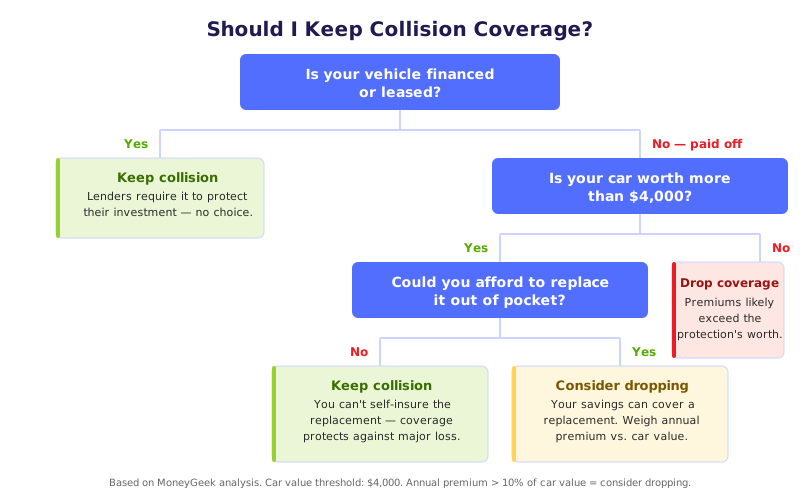
Lenders require collision coverage for financed or leased vehicles to protect their investment. For paid-off cars, keep collision coverage if your car is worth more than $3,000 to $4,000 and you can't afford to replace it yourself. Drop collision coverage if your car is worth less than $3,000, you have sufficient savings for replacement or the annual premium costs more than 10% of your vehicle's value.

vsDocuments icon
MONEYGEEK EXPERT TIP

Don't file a collision claim if repair costs are close to your deductible. A $600 repair with a $500 deductible saves you $100 but risks a rate increase that costs more over time.

How Much Collision Auto Insurance Do I Need?

Choose collision coverage that matches your car's current market value, not what you originally paid. Your deductible choice matters, too. A $500 deductible saves about $200 annually compared to $250, but you'll pay that difference when filing a claim.

Skip collision coverage once your car's value drops below $4,000 because premiums often exceed the protection's worth. Consider your driving habits: high-mileage drivers on busy roads should keep collision coverage even on older cars, while low-mileage drivers in quiet areas with solid savings can skip collision coverage on lower-value vehicles.

The sweet spot for most drivers is collision coverage equaling your car's actual cash value with a $500 to $1,000 deductible.

Is Collision Insurance Enough?

Collision coverage alone isn't enough because it only covers your car damage from accidents, leaving you exposed to liability claims, theft, weather damage and medical expenses. You need complete coverage starting with liability as your foundation.

Most drivers need at least 100/300/100 liability limits to protect their assets plus collision coverage matching your car's current value and comprehensive coverage with a $500 to $1,000 deductible for weather damage, vandalism and theft. Without liability coverage, you're personally responsible for property damage and injuries you cause to others, and without comprehensive coverage, you'll pay out of pocket for non-collision incidents like hail damage or stolen vehicles.

Determining coverage by using these steps as a guide:

    oneSign icon
    Calculate your liability exposure

    Add up your assets (home equity, savings, investments) and choose liability limits that protect this amount. If you have $200,000 in assets, get at least 250/500/100 liability coverage.

    twoSign icon
    Determine your car's actual cash value

    Check Kelley Blue Book, Edmunds, or similar sites for your vehicle's current worth. This amount becomes your collision coverage limit.

    threeSign icon
    Assess your financial cushion

    Choose a deductible you can pay comfortably out of pocket. If you have $2,000 in emergency savings, a $1,000 deductible works. Less savings means choosing a lower deductible.

    fourSign icon
    Evaluate your risk factors

    High-crime area or severe weather exposure? Add comprehensive coverage. Long commute or high annual mileage? Prioritize higher collision limits.

    fiveSign icon
    Review your gaps

    Add uninsured motorist coverage if your state allows it and consider rental reimbursement if you can't afford to be without a car during repairs.

Many drivers underestimate liability limits. Coverage that doesn't protect your full assets leaves you personally responsible for the difference after a serious accident.

Auto Insurance Collision: Bottom Line

Collision coverage pays for your car's damage from accidents regardless of who's at fault, but collision coverage is only required if you finance or lease your car. Choose collision coverage with a $500 deductible if your car's value exceeds what you can comfortably replace out of pocket.

Pair collision coverage with comprehensive coverage for theft, weather and vandalism, plus gap coverage if you owe more than your car's actual cash value. Get quotes from at least three insurers to find the best balance of price and service for your situation.

Auto Collision Insurance: FAQ

We answer your most common collision auto insurance questions:

How much does collision insurance cost?
What's the difference between collision and comprehensive insurance?
What collision insurance deductible should I choose?
Does law require collision insurance?
What does collision insurance not cover?
Should I file a collision claim for minor damage?
Does collision insurance cover a rental car?
What happens if my car is totaled?

About Mark Fitzpatrick


Mark Fitzpatrick headshot

Mark Fitzpatrick, a Licensed Property and Casualty (P&C) Insurance Producer in Connecticut, is MoneyGeek's resident insurance expert. He has analyzed the insurance market for almost a decade, first with LendingTree and now with MoneyGeek, conducting original research on hundreds of insurance companies and millions of insurance rates for insurance shoppers. 

He writes about economics and insurance on MoneyGeek, breaking down complex topics so people can have confidence in their purchase. Like all MoneyGeek analysts, Mark collects and analyzes independent cost and consumer experience data on insurance companies to provide objective recommendations in our content that are independent of any of MoneyGeek's insurance company partnerships. 

His insights on products ranging from car, home and renters insurance to health and life insurance have been featured in The Washington Post, The New York Times and NPR, among others. 

Mark holds a master’s degree in economics and international relations from Johns Hopkins University and a bachelor’s degree from Boston College. He started his career working in financial risk management at State Street before transitioning to the analysis of the personal insurance market. He's also a five-time Jeopardy champion!


Sources