Picking the best car insurance company comes down to one question most comparison sites skip: best for whom? After analyzing rates across all residential areas and scoring carriers on price, claims experience and coverage depth, the answer is rarely the same twice. I've studied rates and car insurance features for over a decade and this year's winners are more diverse, meaning there isn't a one sized-fits-all best car insurance company, but there are best companies based on your driver profile.
Best Car Insurance Companies (2026)
Travelers ranks as the best car insurance company with a score of 4.8 out of 5 rating, with affordable rates, strong customer service and comprehensive coverage options. GEICO wins for best rates, and Amica has the best customer experience among national providers. See which company is best for you below.
Compare rates and coverage from the best car insurance companies.

Updated: May 4, 2026
Advertising & Editorial Disclosure
Our Experience After Reviewing 70+ Car Insurers
Travelers earns the top overall score because it wins on all three dimensions of affordability, customer service, and coverage options. The rates are competitive, the claims experience is consistently above average, and the coverage options includes like new car replacement that most carriers either don't offer or cap at two years. But Travelers doesn't allow you to buy insurance online and you'll need to go through an agent which is a deal breaker for certain buyers.
GEICO is the right call when price is the only variable. No national carrier competes with $43 a month for minimum coverage or $98 for full coverage. The tradeoff is real though. Claims service reviews are inconsistent, hold times run long, and the add-on coverage options are less than the of other top-five carrier. GEICO works best for clean-record drivers who rarely file claims and want the lowest possible monthly bill. If you expect infrequent claims or the need for strong customer service it's the best choice.
Amica is the carrier we'd recommend to anyone who has ever had a bad claims experience somewhere else. The agent service scores are the highest of any national insurer we rated, and customer feedback across review platforms is consistently positive. The rates are higher than Travelers and GEICO, but for drivers who prioritize actually being taken care of after an accident, the premium difference is worth it. While Amica is a regional carrier, they offer insurance in 49 states, excluding Hawaii.
Progressive has the best coverage options. Eight add-on options, diminishing deductible, custom parts coverage for modified vehicles, and a Snapshot telematics program that will lower rates for low-mileage drivers. The base rates run higher than the top three, but drivers with violations or complex coverage needs often find Progressive cheaper. If you have a poor driving record or a lower credit score, Progressive is your best option.
State Farm is the best fit for young drivers and households that want a personal agent relationship. Steer Clear and the good student discount stack in a way no other carrier matches for drivers under 25. The agency-only model is a genuine limitation for drivers who want to manage everything online, but for families with teen drivers who value a local agent knowing their situation, State Farm is best.
Best Car Insurance Companies: Scores & Methodology
| Travelers | 4.8 | 2 | 2 | 4 |
| GEICO | 4.64 | 1 | 7 | 7 |
| Amica | 4.61 | 4 | 1 | 5 |
| Progressive | 4.4 | 7 | 4 | 2 |
| State Farm | 4.38 | 5 | 5 | 7 |
A score alone does not tell the full story. Here is what separates carriers with similar numbers:
- Travelers and GEICO: 0.16 points apart, opposite strengths. Travelers balances all three categories. GEICO wins only on price.
- Amica vs Progressive: Both score similarly overall but Amica leads on service, Progressive leads on coverage.
- Progressive vs State Farm: 0.02 points apart. Progressive scores on coverage, State Farm on affordability.
This analysis evaluated more than 70 insurance companies nationwide, including national carriers, regional providers and local insurers across all U.S. residential areas.
The rankings combine rate analysis, customer feedback and coverage assessments across three weighted factors:
Affordability (60% of total score): Rate quotes were collected for multiple driver profiles across all states, using a baseline profile of a 40-year-old driver with good credit, a clean record and no prior claims. Additional quotes were gathered for young drivers, seniors and drivers with violations to ensure accurate rankings across all demographics.
Customer experience (30% of total score): Customer satisfaction data was compiled from Google reviews, J.D. Power ratings, AM Best financial strength scores and forum discussions. Feedback was organized by state to identify geographic performance variations.
Coverage options (10% of total score): Each provider's range of coverage types and unique policy features was evaluated to assess the breadth and value of available protections.
See our full methodology explanation.
Best Car Insurance Company Reviews
Each of the top five carriers excels in different areas. The reviews below break down pricing by driver profile, customer service performance and unique coverage features for each company.

Travelers
Best for Most Drivers
Average Monthly Full Coverage Rate
$97Based on our methodology's base profile for a 100/300/100 liability and $1,000 deductible comprehensive and collision policyAverage Monthly Minimum Coverage Rate
$50r methodology's base profile for a state minimum liability coverage policy.Agent Service Rating
4.2/5Aggregated from ratings for independent and captive agents representing and selling Travelers car insurance policiesUnique Coverage Option
New car replacement
- pros
Very affordable rates regardless of coverage level
Second-best customer experience out of all national providers
Good selection of add-on coverage options
consNot the most affordable in all states
At $97 a month for full coverage, Travelers is $31 cheaper than Progressive and $27 cheaper than State Farm for the same 100/300/100 policy on a clean record. Travelers does not sacrifice on service to get there. It ranks second nationally on customer experience, which means you are getting near-Amica service quality at near-GEICO prices. The one real limitation is that you cannot buy online. If you need an agent to get covered or have a complex insurance need, that is a feature.
Rating CategoryMoneyGeek ScoreNational RankOverall Rating
4.8
1
Affordability
4.93
2
Customer Experience
4.79
2
Coverage Options
4.09
4
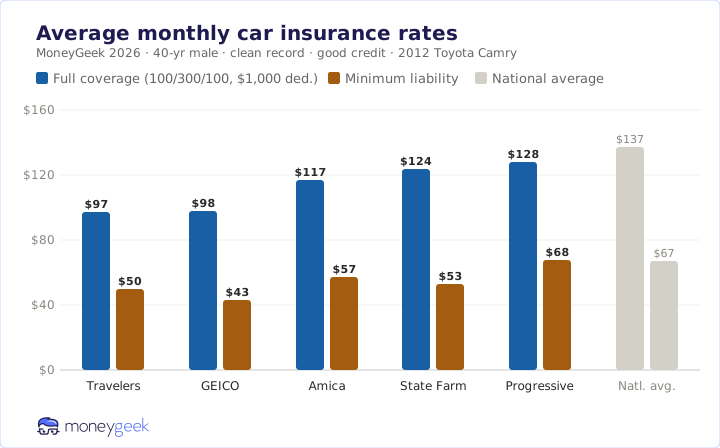
Travelers runs $97 a month for full coverage on a clean record, which is 29% below the national average and cheaper than every major competitor except GEICO. That translates to $325 to $370 a year saved over State Farm and Progressive. Minimum coverage lands third nationally at $50 a month, behind GEICO and State Farm. Where Travelers loses its pricing edge is with high-risk drivers: a DUI pushes rates higher, and that is where Progressive is the better value.
Data filtered by:Adult DriversMale100/300/100 Full Cov. w/$1,000 Ded.GoodClean$97 -29% 1 Second place nationally for customer experience is a meaningful result here than it sounds, because first place is Amica, a carrier that has built its entire identity around service. Travelers competes with Amica on multi-platform sentiment, scoring 4.7 across review sites, social media and forums, the highest of any national carrier we tracked. Agent service scores 4.2 out of 5, and customer reviews back that number up: claims get handled without the runaround that runs through GEICO and Progressive complaint threads.
Rating CategoryMoneyGeek Score (Out of 5)National RankingOverall Score
4.28
2
Google Business Rating
N/A
N/A
Agent Network Service
4.2
4th
Multi-Platform
4.7
1st
New car replacement is the coverage that earns the most attention, and for good reason: Travelers keeps it active for five years, two to four years longer than the one to two year window most carriers offer. If you total a car you bought three years ago, you get a new one instead of a depreciated payout. Rideshare coverage and accident forgiveness round out the add-on options, both available from only a handful of national carriers. If you drive for Uber or Lyft and want one policy that covers personal and commercial use, Travelers is one of five national carriers that makes that possible.

GEICO
Best Cheap Car Insurance
Average Monthly Full Coverage Rate
$98Based on our methodology's base profile for a 100/300/100 liability and $1,000 deductible comprehensive and collision policyAverage Monthly Minimum Coverage Rate
$43Based on our methodology's base profile for a state minimum liability coverage policyAgent Service Rating
4.2/5Aggregated from ratings for independent and captive agents representing and selling GEICO car insurance policiesUnique Coverage Option
Mechanical breakdown insurance
- pros
Cheapest rates overall
Great agent customer service scores
consSmall selection of add-on coverages
Long call waits and mixed reception on claims service
GEICO has the cheapest rates of any national carrier we analyzed: $98 a month for full coverage and $43 for minimum. If affordability is your main concern, then GEICO is a good choice. Claims service reviews are mixed, hold times run long, and GEICO offers only three add-on coverages compared to eight at Progressive. GEICO is the right call if you have a clean record, rarely file claims, and want the lowest possible bill. If you have ever had a bad claims experience or expect to need strong service, pay the extra $5 to $10 a month for Travelers.
Rating CategoryMoneyGeek Score (Out of 5)National RankOverall Rating
4.64
2
Affordability
5
1
Customer Service
4.38
7
Coverage Options
3.26
7
GEICO charges $98 a month for full coverage and $43 for minimum, the lowest minimum coverage rate of any national carrier we analyzed. Travelers is the only carrier that comes close on full coverage, at $97 a month. The price advantage shrinks for high-risk drivers. A DUI pushes GEICO rates to around $200 a month, where Progressive becomes more competitive because of its accident forgiveness and Snapshot discount programs. For drivers with a clean record and good credit, no national carrier is cheaper.
Data filtered by:Adult DriversMale100/300/100 Full Cov. w/$1,000 Ded.GoodClean$98 -28% 2 GEICO ranks seventh nationally for customer experience, which is the tradeoff to get the lowest rates. Agent service scores well at 4.2 out of 5, but that number does not reflect what happens after you file a claim. Customers report long hold times and inconsistent handling, and GEICO ranks ninth out of the carriers we tracked across review sites, Reddit and social media. If you have a straightforward claim, the experience is usually fine. If your claim is disputed or complicated, the reviews suggest you will feel the difference between GEICO and a service-first carrier like Amica or Travelers.
Rating CategoryMoneyGeek Score (Out of 5)National RankOverall Rating
4.39
7
Google Business Rating
N/A
N/A
Agent-Network Service
4.2
4th
Multi-Platform
3.5
9th
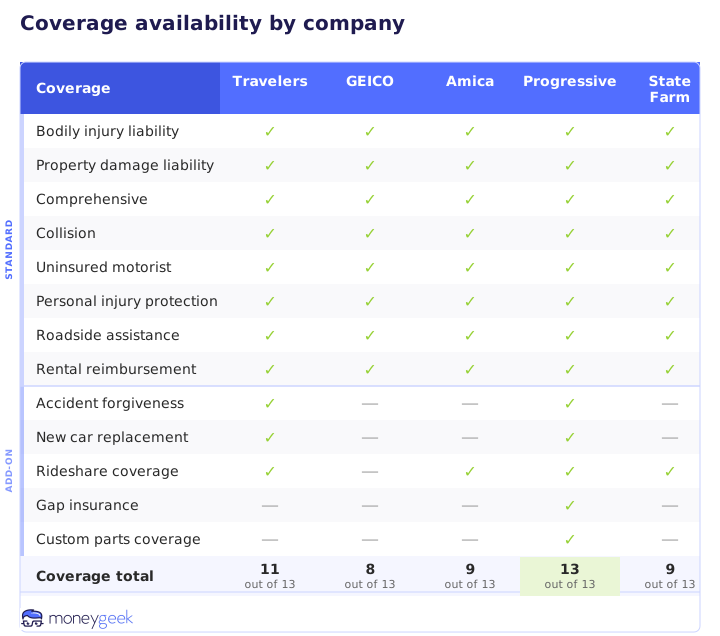
GEICO offers three add-on coverages, fewer than any other carrier in our top five. Roadside assistance and rental reimbursement are the standard two. The third is mechanical breakdown insurance, which covers repair costs from mechanical failures rather than accidents. It costs less than most extended warranties and is available from only five national carriers. If your car is aging and you want protection against repair bills without buying a dealer warranty, it is worth pricing out. If you need rideshare coverage, accident forgiveness or custom parts protection, GEICO does not offer them.

Amica
Best Customer Experience
Average Monthly Full Coverage Rate
$117Based on our methodology's base profile for a 100/300/100 liability and $1,000 deductible comprehensive and collision policyAverage Monthly Minimum Coverage Rate
$57Based on our methodology's base profile for a state minimum liability coverage policyAgent Service Rating
4.7/5Aggregated from ratings for independent and captive agents representing and selling Amica car insurance policiesUnique Coverage Option
Auto-glass coverage
- pros
Highest overall customer service ratings
Higher than average selection of coverage add-ons
Very affordable for senior drivers
consDoesn't operate in Hawaii
Higher rates than other providers
Amica costs more than Travelers and GEICO, at $117 a month for full coverage, but it has the best claims service of any national carrier we rated. No other insurer scores higher across agent service, J.D. Power ratings and customer reviews at the same time. That matters most after an accident, when the difference between a good and bad claims experience is real money and real stress. Senior drivers get the best of both worlds: Amica's rates for drivers over 65 are among the most competitive nationally, so the service premium costs less for that group than it does for younger drivers.
Rating CategoryMoneyGeek Score (Out of 5)National RankOverall Rating
4.62
3
Affordability
4.55
4
Customer Experience
5
1
Coverage Options
3.87
5
Amica charges $117 a month for full coverage and $57 for minimum, which puts it $20 more per month than Travelers and $19 more than GEICO for the same policy on a clean record. That gap is the price of the service difference. Where Amica closes the gap is with senior drivers: rates for drivers over 65 are competitive with Travelers, making it the rare insurer where you do not have to choose between good service and a reasonable price. High-risk drivers pay more at Amica than at Progressive, which is the better option if your record has violations.
Data filtered by:Adult DriversMale100/300/100 Full Cov. w/$1,000 Ded.GoodClean$115 -15% 4 Amica scores first nationally for customer experience and it is not close. Agent service hits 4.7 out of 5, the highest of any carrier we rated. J.D. Power ranks Amica at the top for overall satisfaction, and customer reviews across Reddit, social media and review sites are consistently positive in a way no other national carrier matches. The feedback is specific too: customers cite claims handling and policy management, not just general satisfaction. If you have had a bad experience with another carrier and want to know it will go differently, Amica is the answer.
Rating CategoryMoneyGeek Score (Out of 5)National RankOverall Rating
5
1
Google Business Rating
N/A
N/A
Agent Service
4.7
1
Multi-Platform
4.5
1
Amica offers five add-on coverages, which puts it in the middle of our top five. The two that stand out are auto glass coverage and rideshare insurance. Auto glass coverage means no deductible on windshield and window repairs, only two national carriers offer it. If you have ever paid $400 out of pocket to replace a windshield, that is the coverage you wished you had. Rideshare insurance covers the gap between your personal policy and what Uber or Lyft provides while you are driving for them, and only five national carriers sell it.

Progressive
Best Car Insurance Coverage Options
Average Monthly Full Coverage Rate
$128Based on our methodology's base profile for a 100/300/100 liability and $1,000 deductible comprehensive and collision policyAverage Monthly Minimum Coverage Rate
$68Based on our methodology's base profile for a state minimum liability coverage policyAgent Service Rating
4.6/5Aggregated from ratings for independent and captive agents representing and selling Progressive car insurance policiesUnique Coverage Option
Custom parts coverage
- pros
Best add-on coverage selection
Great online buying experience with discounts
Large selections of discounts
consHigher average rates
Progressive is the most expensive of our top five for clean-record drivers at $128 a month for full coverage, but it is the best option if your record has a violation. A DUI drops Progressive to third nationally for affordability, meaning drivers who would pay a penalty at every other carrier will find their best rate here. The coverage options are the widest of any carrier we rated: eight add-ons including diminishing deductible, custom parts coverage and mechanical breakdown insurance. If you drive a modified car, work for a rideshare service, or have a DUI or at-fault accident on your record, Progressive is worth pricing first.
Rating CategoryMoneyGeek Score (Out of 5)National RankOverall Rating
4.4
4
Affordability
4.26
7
Customer Experience
4.55
4
Coverage Options
4.85
2
Progressive charges $128 a month for full coverage on a clean record, the highest of our top five. For minimum coverage the rate is $68 a month, also the highest in the group. Those numbers change for drivers with violations. A DUI drops Progressive to third nationally for affordability at $161 a month, where it beats Travelers, State Farm and Amica by a wide margin. The Snapshot telematics program can also pull rates down for low-mileage drivers regardless of their record. If your driving history is clean and your mileage is average, Progressive is not your best price option.
Data filtered by:Adult DriversMale100/300/100 Full Cov. w/$1,000 Ded.GoodDUI - BAC >= .08$161 -34% 3 Progressive scores well on agent service at 4.6 out of 5, third nationally, and the online buying experience gets consistent praise from customers. The weaker spot is claims. Progressive ranks eighth across review sites, social media and Reddit, and the complaint pattern is specific: customers who file straightforward claims are generally fine, those with complicated or disputed claims report a harder time. That tracks with what you would expect from a carrier built around price and digital convenience rather than service depth. If you rarely file claims and want to manage everything online, that tradeoff works. If claims handling is a priority, Travelers or Amica are better fits at similar or lower prices.
Rating CategoryMoneyGeek Score (Out of 5)National RankOverall Rating
4.55
4
Google Business Rating
4.3
4
Agent Network Service
4.6
3
Multi-Platform
3.6
8
Progressive offers eight add-on coverages, more than any other carrier in our top five. Roadside assistance and rental reimbursement are standard. The three worth paying attention to are diminishing deductible, custom parts coverage and mechanical breakdown insurance. Diminishing deductible reduces what you owe by $50 each claim-free year, only three national carriers offer it. Custom parts coverage protects aftermarket modifications like upgraded stereos or custom rims, and only two national carriers sell it. Mechanical breakdown insurance covers repair costs from mechanical failures rather than accidents, which costs less than most extended warranties. If you have a modified car or want coverage that rewards clean driving, no carrier in our top five gives you more options.

State Farm
Best Discount Programs for Young Drivers
Average Monthly Full Coverage Rate
$124Based on our methodology's base profile for a 100/300/100 liability and $1,000 deductible comprehensive and collision policyAverage Monthly Minimum Coverage Rate
$53Based on our methodology's base profile for a state minimum liability coverage policyAgent Service Rating
4.5/5Aggregated from ratings for independent and captive agents representing and selling State Farm car insurance policiesUnique Coverage Option
Rideshare coverage
- pros
Great discount programs for young drivers 25 and under
Affordable minimum coverage rates
More personal agent-only service model
consNot very affordable for those with bad credit
No online quotes
Lacking in add-on coverage options
State Farm is the best option for families with drivers under 25. The Steer Clear program and the good student discount stack together in a way no other carrier matches, and the savings for that profile are real. Full coverage runs $124 a month for a clean-record adult, which is middle of the pack. The agent-only model is a genuine limitation: you cannot get a quote or manage your policy online. For a single driver who wants to handle everything digitally, that is a dealbreaker. For a family with teen drivers who wants a local agent who knows their situation, it is exactly what State Farm is built for.
Rating CategoryMoneyGeek Score (Out of 5)National RankOverall Rating
4.38
5
Affordability
4.52
5
Customer Experience
4.48
5
Coverage Options
3.26
7
State Farm charges $124 a month for full coverage and $41 for minimum on a clean record. The full coverage rate puts it fourth in our top five, $27 more than Travelers and $26 more than GEICO. Minimum coverage is more competitive, landing fourth nationally at $41 a month, the same rate as Amica. Where State Farm struggles on price is with bad credit drivers: rates climb more sharply than at Progressive or Travelers for that profile, and that is where State Farm stops being a strong value. For drivers with good credit and a clean record, the price is reasonable given the agent network and discount programs for young drivers.
Data filtered by:Adult DriversMale100/300/100 Full Cov. w/$1,000 Ded.GoodClean$121 -11% 5.00 State Farm scores 4.5 out of 5 for agent service, tied for fourth nationally. They have more agents in more places than any other insurer in the country. If you want a local person who knows your policy and can walk you through a claim, State Farm gives you that more consistently than any carrier except Amica. The weaker spot is everything outside of agent interactions. Customer reviews across Reddit and review sites rank State Farm sixth, with the most common complaint being slow claims processing when handled remotely.
Rating CategoryMoneyGeek Score (Out of 5)National RankOverall Rating
4.48
5
Google Business Rating
N/A
N/A
Agent Network Service
4.5
4
Multi-Platform
3.9
6
State Farm offers three add-on coverages, tied with GEICO for the fewest in our top five. Roadside assistance and rental reimbursement are standard across most carriers. The one add-on worth noting is rideshare insurance, which covers the window between your personal policy and what Uber or Lyft provides while you are driving for them.
Best Car Insurance Companies by State
National rankings tell part of the story. At the state level, regional carriers close the gap with nationals on price and often beat them on service, because their entire business is concentrated in a smaller market and their claims and agent networks reflect that focus. State-level rankings include regional carriers not available nationwide and the largest national car insurance companies.
Find the top-rated carrier for your state in the table below, which includes affordability, customer experience and coverage rankings for each state winner.
National rankings are a starting point. At the state level the picture changes significantly. Here is what stands out from our analysis:
The Regional carriers often beat national brands. Travelers is best in 17 states but Auto-Owners is the more interesting story. It is available in only 26 states but ranks first in 12 of them. In every state where it operates, Auto-Owners scores near the top for both price and service. If you live in a state where Auto-Owners writes policies, it belongs in your quote comparison regardless of where it ranks nationally.
Some states reward shopping more than others. Delaware and Colorado have the widest gap between the cheapest carrier and the state average. Finding the right carrier in those states saves more money than almost anywhere else in the country. Washington is the opposite. Rates cluster so tightly there that your ZIP code and deductible choice matter more than which carrier you pick.
Local market conditions change who is best. Louisiana and New York are the clearest examples of states where national rankings break down. Progressive ranks fifth nationally for affordability but first in Louisiana, where its local market expertise gives it a pricing advantage. A driver in either state who only compares national brands is likely leaving money on the table.
| Alabama | AIG | 1 | 8 | 6 |
| Alaska | Geico | 1 | 3 | 3 |
| Arizona | Travelers | 1 | 2 | 4 |
| Arkansas | Travelers | 2 | 2 | 6 |
| California | Progressive | 2 | 3 | 2 |
| Colorado | American National | 1 | 10 | 5 |
| Connecticut | Geico | 1 | 4 | 6 |
| Delaware | Travelers | 1 | 1 | 4 |
| District of Columbia | Erie Insurance | 2 | 1 | 2 |
| Florida | Travelers | 1 | 1 | 4 |
| Georgia | Auto Owners | 2 | 1 | 7 |
| Hawaii | Geico | 1 | 4 | 5 |
| Idaho | State Farm | 1 | 4 | 6 |
| Illinois | Auto Owners | 2 | 1 | 6 |
| Indiana | Travelers | 3 | 2 | 5 |
| Iowa | Travelers | 1 | 2 | 5 |
| Kansas | Travelers | 2 | 2 | 5 |
| Kentucky | Travelers | 1 | 2 | 5 |
| Louisiana | Progressive | 5 | 1 | 2 |
| Maine | Travelers | 1 | 2 | 4 |
| Maryland | Travelers | 3 | 2 | 5 |
| Massachusetts | Plymouth Rock Insurance | 1 | 3 | 1 |
| Michigan | Travelers | 1 | 2 | 5 |
| Minnesota | Auto Owners | 2 | 1 | 5 |
| Mississippi | Travelers | 2 | 1 | 5 |
| Missouri | Auto Owners | 1 | 1 | 6 |
| Montana | State Farm | 1 | 2 | 5 |
| Nebraska | Auto Owners | 3 | 1 | 6 |
| Nevada | Travelers | 1 | 1 | 4 |
| New Hampshire | Auto Owners | 6 | 1 | 6 |
| New Jersey | Plymouth Rock Insurance | 1 | 3 | 1 |
| New Mexico | Central Insurance | 2 | 3 | 1 |
| New York | Progressive | 2 | 4 | 1 |
| North Carolina | Progressive | 2 | 2 | 2 |
| North Dakota | Auto Owners | 6 | 1 | 5 |
| Ohio | Auto Owners | 1 | 1 | 7 |
| Oklahoma | Progressive | 1 | 1 | 2 |
| Oregon | Progressive | 1 | 2 | 2 |
| Pennsylvania | Erie Insurance | 2 | 1 | 3 |
| Rhode Island | Amica | 2 | 1 | 5 |
| South Carolina | Auto Owners | 3 | 1 | 5 |
| South Dakota | Progressive | 1 | 2 | 2 |
| Tennessee | Auto Owners | 1 | 1 | 6 |
| Texas | State Farm | 1 | 3 | 6 |
| Utah | Auto Owners | 2 | 1 | 5 |
| Vermont | State Farm | 3 | 3 | 6 |
| Virginia | Travelers | 1 | 3 | 5 |
| Washington | Geico | 1 | 6 | 6 |
| West Virginia | Erie Insurance | 2 | 1 | 3 |
| Wisconsin | Travelers | 2 | 3 | 5 |
| Wyoming | State Farm | 2 | 1 | 3 |
Rates at the Best Car Insurance Companies
Rate differences at the best car insurance companies are larger than most drivers expect. The chart below shows why comparison shopping matters: two insurers can charge nearly identical rates for one coverage level and differ by $30 or more for another. Your actual rate will fall above or below these averages based on your state, age, driving record and credit score.

Coverage Options at the Best Car Insurance Companies
The best car insurance company is the one that offers the coverage you actually need. A carrier with a top rating means little if it does not offer accident forgiveness, rideshare coverage or new car replacement for your situation. The table below shows which of our top five rated companies offer each coverage type, followed by an explanation of what each one covers and when it is worth having.

Pays for the other person's medical bills and lost wages if you cause an accident. Every state requires it. The default limits are often too low — a serious injury can cost far more than a $25,000 policy pays, and you are personally responsible for the difference.
Covers the cost of repairing or replacing the other driver's vehicle or property if you are at fault. Also required in every state. A $25,000 limit sounds like a lot until you consider the cost of a newer vehicle.
Covers damage to your own car from events outside a collision — theft, fire, hail, flooding, falling trees and animal strikes. If you live somewhere with severe weather or high vehicle theft rates, this is worth having. Required by lenders on financed vehicles.
Pays to repair or replace your car after an accident you cause. Without it, you pay for your own vehicle damage out of pocket. Required by lenders. For older low-value vehicles, dropping it and self-insuring is often the smarter financial call.
Covers your injuries and vehicle damage when the at-fault driver has no insurance or not enough of it. About one in eight drivers on the road is uninsured. Without this coverage, you absorb their cost.
Pays your medical bills and a portion of lost wages after an accident regardless of who caused it. Required in no-fault states like Florida, Michigan and New York. Useful if you do not have strong health insurance.
Prevents your rate from going up after your first at-fault accident. Rates typically increase 20 to 40 percent after a claim so accident forgiveness eliminates that risk for one incident. Worth it if you have a clean record and want to protect it.
If your new car is totaled, standard insurance pays the depreciated value and not what you paid for it. New car replacement covers the cost of a brand new equivalent model instead. Travelers offers this for five years, the longest window of any major carrier.
How to Use These Rankings to Find Your Best Company
The best car insurance company for you depends on your driver profile, location and priorities. Use the steps below to narrow our rankings to your top options, then compare quotes for your actual rate.
Car insurance rates vary more than most drivers expect. The same coverage from two different insurers can differ by $100 or more per month for the same driver. State also matters. Regional carriers like Auto-Owners and Erie beat national brands on price in several states despite having almost no brand recognition outside their markets. Get at least three quotes before deciding. Our recommendation: start with GEICO nationally, then check your state table to see if a regional carrier beats it where you live.
Claims handling satisfaction varies across insurers and the difference only becomes clear after an accident. Carriers that score well on price often score lower on claims satisfaction. Drivers who have had a frustrating claims experience elsewhere consistently rate service-focused carriers differently. Our recommendation: start with Amica. Its claims handling and agent service scores are the highest of any national insurer we rated.
Most drivers do not need the absolute lowest rate or the absolute best service. They want a carrier that is competitive on price and reliable when they need it. That balance is harder to find than it sounds. Our recommendation: start with Travelers. It finishes second on both affordability and customer experience with no major weakness in either category.
Use MoneyGeek's car insurance calculator and the company comparison table to evaluate rates and compare them against the national average cost of car insurance for your driver profile, customer service scores, and coverage options. After determining how much car insurance you need, get quotes from your shortlist since your actual rate depends on your specific profile.
Some of the best carriers on this page are agent only. Travelers and State Farm do not offer online quotes or online policy management, which is a dealbreaker for many drivers regardless of their rankings. If you want fully digital, GEICO and Progressive are your strongest options. We recommend online for single drivers or married couples with low complexity and a good driving record. An agent is helpful when you have multiple cars, a family with teenage drivers, and more assets that you need to protect.
Best Car Insurance: FAQ
Here are answers to frequently asked questions to help you find the best car insurance company for your needs:
What is the best car insurance company for young drivers under 25?
Travelers ranks best for young drivers under 25, offering competitive rates and strong customer service for this age group. State Farm also performs well through its Steer Clear discount program for drivers under 25 who complete safe driving courses.
What is the best car insurance company for senior drivers over 65?
Amica is best for senior drivers over 65 with a perfect 5 out of 5 customer experience rating and increasingly competitive rates as drivers age. The company ranks second nationally for senior driver affordability. See our guide to the cheapest car insurance for seniors.
Which car insurance companies offer new car replacement coverage?
Three national carriers offer new car replacement: Travelers, Progressive and Liberty Mutual. Travelers provides the longest coverage window at five years compared to the typical one to two years competitors offer.
Which car insurance companies have rideshare coverage?
Five national carriers offer rideshare coverage: Travelers, Amica, Progressive, State Farm and Allstate. This coverage protects Uber and Lyft drivers during logged-in periods while waiting for ride requests.
Is a regional car insurance company better than a national company?
Regional insurers often beat national carriers at the state level through competitive local pricing and highly-rated customer service. Auto-Owners ranks first in 46% of states where it operates. Regional carriers typically offer fewer digital tools and the buying process can be longer.
About Mark Fitzpatrick

Mark Fitzpatrick, a Licensed Property and Casualty (P&C) Insurance Producer in Connecticut, is MoneyGeek's resident insurance expert. He has analyzed the insurance market for almost a decade, first with LendingTree and now with MoneyGeek, conducting original research on hundreds of insurance companies and millions of insurance rates for insurance shoppers.
He writes about economics and insurance on MoneyGeek, breaking down complex topics so people can have confidence in their purchase. Like all MoneyGeek analysts, Mark collects and analyzes independent cost and consumer experience data on insurance companies to provide objective recommendations in our content that are independent of any of MoneyGeek's insurance company partnerships.
His insights on products ranging from car, home and renters insurance to health and life insurance have been featured in The Washington Post, The New York Times and NPR, among others.
Mark holds a master’s degree in economics and international relations from Johns Hopkins University and a bachelor’s degree from Boston College. He started his career working in financial risk management at State Street before transitioning to the analysis of the personal insurance market. He's also a five-time Jeopardy champion!
Sources
- Progressive. "Progressive Insurance Reviews." Accessed April 29, 2026.
- J.D Power. "J.D. Power Auto Insurance Study." Accessed May 6, 2026.
- AM Best. "Ratings." Accessed April 30, 2026.