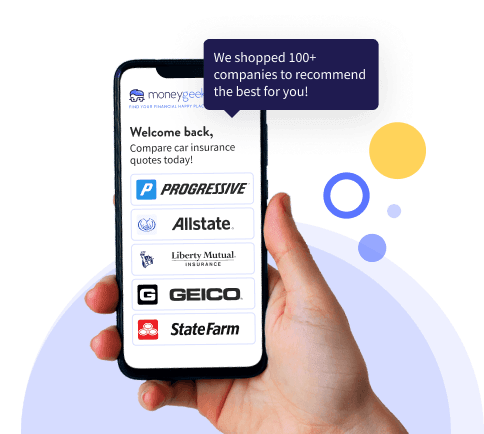

Getting car insurance starts with knowing what you need and where to look. The six steps will walk you through gathering your information, choosing coverage, comparing quotes and buying a policy. After that, you'll find tips on cutting costs and avoiding common mistakes.
How to Get Car Insurance in 6 Steps
 DB
DBUpdated: October 20, 2026
Advertising & Editorial Disclosure
Step 1: Gather Your Personal Information
Your car insurance rates depend on various factors, like your personal info, car type, driving history and past insurance records. Insurers use this data to gauge your risk level and set premiums accordingly. Before you start shopping, gather what you need to get car insurance so the application process goes smoothly.
Provide accurate details to get the correct pricing for your policy.
 Your Bio
What you do, where you work and where you live will influence your insurance rate.
Provide your details and those of any additional drivers you will include on your policy:
- Full name
- Date of birth
- Address
- Email address
- Contact number
- Social Security number (or other ID)
Depending on the provider, you might need to provide payment details (e.g., bank account details, credit card number) to initiate the policy.
 Your Car Details
Have information about your car all in one spot, including the following:
- Vehicle Identification Number (VIN)
- Make, model and year of the vehicle(s)
- Vehicle registration details, including the state and expiry date
- Usage details (e.g. daily commute, business use, estimated annual mileage)
- Vehicle ownership history
- The car title
- Current odometer reading
Some insurers will ask how often you use your car and how long you’ve owned it.
 Your Driving and Insurance History
Insurers will likely ask about any accidents, DUIs, suspensions or accumulated points on your driving record. They might check your Motor Vehicle Record (MVR), which provides a detailed history of your driving violations, accidents and license status, to verify this information. A prior insurance lapse or the need to file an SR-22 can also affect your rates. When applying, let your agent know your current coverage and insurance provider.
If you have all this information ready, you can usually get car insurance the same day you start shopping.
Moving to a new state? Learn how out-of-state car insurance works and when you need to switch your policy.
HOW TO GET CAR INSURANCE WITHOUT A LICENSE
Unlicensed drivers can still get car insurance in certain situations, such as when another household member drives your vehicle or you own a car kept in storage. Getting car insurance without a driver's license explains your options and how to list yourself as a non-driving insured person, which may involve a named non-owner policy or using an excluded driver endorsement if another licensed driver in your household is covered.
Step 2: Choose Where to Buy Car Insurance
You can buy car insurance in three ways: through a captive agent, an insurance broker or by getting a quote online.
- Captive Agent: A captive agent sells policies for a single insurer only.
- Insurance Broker: Brokers represent multiple insurers, giving you several policy options to review.
- Online: Request a quote on an insurer's site, or use third-party car insurance calculators to compare multiple quotes at once. Some insurer sites offer exclusive deals, while comparison tools show rates from several providers in one place.
If you want help deciding how much coverage to buy, a captive agent or broker can answer questions about your options. If you already know the coverage and limits you need, you can apply online and start your policy once you've reviewed your choices.
Criteria | Captive Agent | Insurance Broker | Online |
|---|---|---|---|
Expertise | Knows one company's coverage in depth | Compares plans across insurers | Shows quotes from multiple companies |
Support | Immediate answers | Finds quotes and explains options | Self-service tools and chat support |
Options | Limited choices | Access to several insurers | Compare rates yourself |
Limitations | Can't quote other companies; earns commissions on sales | Some insurers don't work with brokers; may charge fees | Enter personal data; fewer coverage details upfront |

BEST WAY TO GET INSURANCE QUOTES
Online car insurance quotes through insurance calculators are the most efficient way to find coverage. Direct insurer quotes can also surface exclusive discounts and open a relationship with the provider. Comparing quotes saves about $445 yearly. MoneyGeek recommends getting quotes from at least three insurers at similar coverage levels to find the best rate.
Beyond price, weigh deductibles, policy limits and coverage customization options to make sure you're getting the best value. Have your driving history, vehicle details and address ready to get accurate estimates.
Step 3: Know How Much Coverage You Need
Nearly every state requires car insurance before you drive. Each state also has its own minimum car insurance requirements. This means you must have liability insurance to pay for others' damages. Some states might also need personal injury protection (PIP) or uninsured/underinsured motorist coverage (UM/UIM).
You can go with just your state's basic coverage if you want to save money. But you might want more coverage if your car is worth a lot.
Coverage Type | What It Covers | Is it Required? |
|---|---|---|
Injury and property damage you cause to others in an accident | Yes (in 48 states) | |
Personal Injury Protection (PIP) | Your medical expenses and lost wages after an accident (regardless of fault) | Yes (in no-fault states) |
Medical expenses if a driver hurts you without insurance or with insufficient insurance | Yes (in some states) | |
Costs to repair or replace your car after an accident | No, but required for financed/leased cars | |
Damage to your car from non-accident events (theft, weather damage, etc.) | No, but required for financed/leased cars | |
Gap Insurance | Covers the difference between your car’s value and the loan balance if your car is totaled or stolen | No, but it is sometimes required for financed/leased cars |

DO YOU NEED TO BUY INSURANCE BEFORE BUYING A CAR?
Yes, you need insurance before getting behind the wheel of your new car. Dealerships usually ask for proof of insurance before you can take the car home. Not having insurance is against the law and could land you in trouble. Coverage lapses can also increase your rates.
Drivers who prefer a fully digital process can learn how to get car insurance without an agent and buy a policy entirely online in 15 minutes.
Step 4: Choose a Car Insurance Company
The right car insurance company delivers the right mix of coverage, affordability and reliable service. Keep these factors in mind:
- "Cheapest" vs. "Best": Price matters, but coverage that fits your needs matters just as much. The right policy balances both.
- Coverage: Confirm the insurer offers the coverage types you need, including liability, collision and comprehensive, at limits that match your risk level.
- Budget: Lowering your coverage limits can trim your premium. Weigh those savings against what you'd pay out of pocket after an accident, and ask about bundling auto and home policies for additional discounts.
- Customer Service: Claims handling counts when something goes wrong. Read customer reviews and check J.D. Power ratings and NAIC complaint data to see how insurers handle payouts and disputes.
- Financial Strength: Prioritize insurers with AM Best ratings of A+ or A++, which signal the company can pay claims reliably.
Step 5: Shop Around for Car Insurance Quotes
Get quotes from at least three insurers and request the same coverage types and limits from each. Rates for the same driver can vary by hundreds of dollars depending on the company. Use the MoneyGeek car insurance calculator to estimate what you should be paying, and see how the cheapest car insurance companies rank before you commit. Our guide on how to compare car insurance walks through what to look for beyond price.
Car Insurance Calculator
MoneyGeek's car insurance calculator will give you a customized estimate of your auto insurance cost. It's free to use, requires no personal information and we won't send you any spam.
$192
High
$139
Average
$87
Low
Rates updated:
Oct 26, 2026
| Insurance Provider | Insurance Carrier | MoneyGeek ScoreMG Score | Average Monthly Payment |
|---|---|---|---|
| 1 |  Capital Insurance Group | 94 /of 100 | $87 |
| 2 |  GEICO | 82 /of 100 | $109 |
| 3 |  State Farm | 83 /of 100 | $118 |
| 4 |  Travelers | 83 /of 100 | $129 |
| 5 |  Progressive | 79 /of 100 | $133 |
| 6 |  Farmers | 77 /of 100 | $151 |

Although MoneyGeek partners with some of the companies we recommend, our content is written and reviewed by an independent team of writers, editors and licensed agents. Learn more about our editorial policies and expert editorial team.
Step 6: Purchase Your Car Insurance Policy
Complete the application, set up your payment schedule and confirm your start date. Your proof of car insurance card will be required for traffic stops, registration and accidents, so have it ready. Accepted forms of proof of insurance can include digital proof via an app or email, or temporary proof.
Your insurance provider will finalize your policy after the underwriting process is complete. If you're switching insurers, start your new policy before canceling the old one to avoid a coverage lapse, which can raise your rates.
Tips on Shopping for Car Insurance
Car insurance costs more than most drivers expect, but several factors are within your control. Here are a few ways to cut costs without sacrificing coverage.
 Don’t Overlook Usage-Based Programs
Many insurers offer telematics insurance, which tracks your driving habits through an app or device. Safe driving behavior, including smooth braking, no speeding and limited late-night driving, can earn discounts of 10% to 30% depending on the insurer. Ask your potential insurers if they offer such a program.

Bundling home or renters insurance with car insurance from the same company often qualifies you for a multi-policy discount. The best home and auto bundles can save you hundreds of dollars annually. Ask your chosen insurer, or others if you're still comparing, about potential savings with bundling.
 Leverage Memberships and Affiliations
Many organizations offer car insurance discounts to their members. Check with your employer, professional associations, alumni groups, or organizations like AAA and AARP for insurer partnerships. AAA provides member discounts that vary by membership tier and apply through partner insurers or direct AAA insurance, while AARP offers its own car insurance programs and discounts for members.
 Review Your Coverage Annually
Marriage, moving, buying a new car, a changed driving record, adding a teen driver or retirement can all shift your insurance needs. Review your policy every year to confirm it still fits your situation, since adjusting coverage types or limits can lower your premium when your circumstances allow.
An agent consultation can clarify your options, and comparing prices across providers helps confirm you're getting the best rates and coverage for your updated situation.
New to auto insurance? Start with the basics. Our guide explains how insurance works from premiums and deductibles to filing claims. See also if you need insurance before buying a used car.
FAQ About Buying Car Insurance
Good information makes the process straightforward. Read through the most common questions drivers ask when shopping for coverage.
Trouble getting car insurance doesn't mean you're out of options. Try applying with different providers, or work with an insurance broker who can point you toward solutions. Be upfront with agents about credit issues or past payment problems, and work on improving your credit score in the meantime. A defensive driving course can also strengthen your driving record.
Drivers who still can't qualify for private coverage can turn to state insurance programs or assigned risk pools, which exist specifically for those who can't get coverage elsewhere.
Most states require at least liability-only coverage, but the specific minimum car insurance requirements vary by state, so check with your local provider. These usually include set bodily injury liability (BIL) and property damage liability (PDL) limits. No-fault states often add personal injury protection (PIP) requirements, which cover medical expenses and lost wages regardless of who caused the accident, while some states also require uninsured/underinsured motorist (UM/UIM) or medical payments (MedPay) coverage.
How long it takes to get car insurance depends on the situation. If you have the completed documents needed to buy a car insurance policy, the insurance application process can take anywhere from 20 minutes to a few hours. This includes submitting your information, answering questions about your driving history and vehicle, and receiving a quote. If you intend to get car insurance quickly and easily, make sure that you already know the type of coverage you want. Having a shortlist of companies will also help speed up the process.
Lowering your coverage is the most common way to get a policy with a more affordable premium. This often means opting for your state's minimum liability coverage, the lowest amount legally required in your state. Comparing quotes and finding good deals and discounts can also help you afford one. Our guide to what to do if you can't afford car insurance can help you get started.
Yes, it’s possible to get car insurance even without a driver’s license. If someone else drives your car, or you own a classic car you don't use, you can insure it even without a license.
Most car insurance companies allow you to pay via credit card. You can choose to pay online, over the phone, through a website or even via an app. State Farm, GEICO and Progressive are the most notable car insurance companies that accept credit card payments.
Buying non-owner insurance is the best way to get car insurance for a car not registered in your name. It’s liability-only coverage. So, if this doesn't work for you, there are alternative options for coverage, such as getting car rental insurance coverage.
Getting car insurance after a canceled policy is challenging but possible. While you can acquire a new car insurance policy after non-renewal or cancellation, bear in mind that you will most likely have to pay higher premiums.
Loading...
Why Trust MoneyGeek? MoneyGeek gathered auto insurance quotes from Quadrant Information Services to give you the best car insurance calculator for estimating costs. It provides a quote to help you make informed decisions about your car insurance. After entering your unique information, the calculator provides a real-time estimate of your potential premiums.
2,118,312
Quotes Analyzed
67
Companies Compared
897
Zipcodes





About Danielle Beck-Hunter

Danielle Beck-Hunter is a personal finance researcher specializing in auto insurance for the past three years. She is passionate about financial education and aims to help readers live their best lives while saving money. Her writing has been featured on various insurance websites.