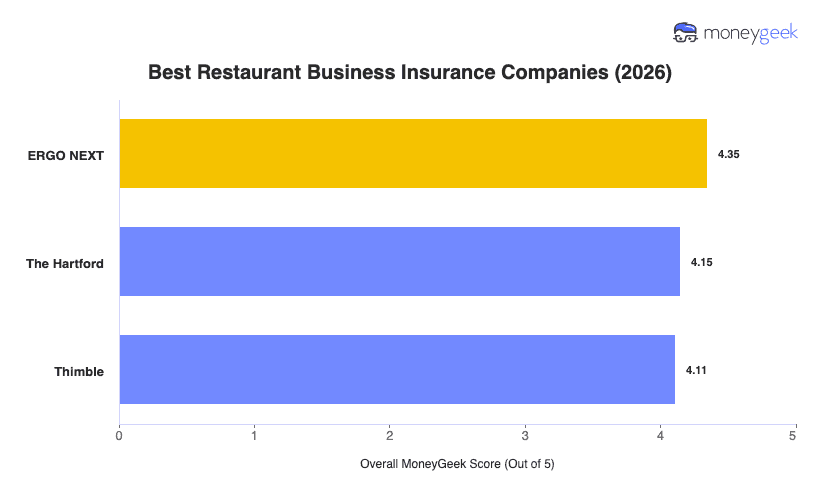

Full-service restaurants face a consistent set of exposures most other small businesses don't. Customers move through crowded dining rooms, and kitchen staff work daily with open flame, industrial equipment and sharp tools. A bar program creates liability the moment alcohol leaves the glass. Business insurance for a restaurant bundles the policies designed to cover those specific conditions, calibrated to how a dining operation actually runs. For most full-service restaurants, those exposures look like this:
- A customer sustaining a burn injury from a server carrying a cast-iron skillet through a crowded dining room
- A line cook's workers' comp claim after a deep fryer burn or a repetitive-strain injury from prep work
- A guest involved in a drunk-driving accident after being served by bartending staff, triggering dram shop liability
- A grease fire damaging the kitchen hood, exhaust system and surrounding equipment
- A manager driving to a food distributor in a restaurant-owned vehicle and causing an at-fault accident
- Hackers compromising a POS system and exposing the credit card data of hundreds of customers processed across a busy weekend dinner service
The right food business insurance mix depends heavily on how the restaurant operates. A 12-seat neighborhood bistro that leases its space, holds a beer-and-wine license and runs a small front-of-house team has a different risk profile than a 200-seat full-service restaurant with a full liquor license, private dining rooms and an event catering program. Getting the coverage right means starting with your actual service model, not a generic restaurant template.