
What Is General Liability Insurance in Indiana?

General liability insurance pays for legal defense, medical bills and property repairs when customers or vendors claim your business caused injury or damage. Coverage applies when a patron falls at your Indianapolis café, your plumbing work causes water damage in a Bloomington home or a competitor accuses your Terre Haute design firm of copying their brochure layout.

Indiana law doesn't require general liability, but you'll need proof of insurance to lease commercial space in most Indiana cities or win contracts with established companies.

Learn more: What Does General Liability Insurance Cover?

Is General Liability Insurance Required in Indiana?

Indiana law doesn't require general liability insurance, but you'd have difficulty leasing commercial property or landing corporate contracts without it. Landlords across Indianapolis and Fort Wayne won't hand over keys until you provide a certificate of insurance (COI), and manufacturers supplying parts to the auto industry need proof of coverage before purchase orders get approved. 

Standard agreements call for $1 million per occurrence, with higher limits for construction projects and professional services.

Read more: General Liability Insurance Requirements

Who Needs General Liability Insurance in Indiana?

Manufacturing operations, agritourism businesses and service contractors across Indiana deal with third-party injury and property damage risks on a regular basis. Customer falls at your Bloomington brewery, utility damage during landscaping work in Fishers, or equipment-related injuries at your Evansville gym all trigger general liability claims that cost thousands in legal fees and settlements.

Standard contracts call for $1 million per occurrence coverage, with higher limits required for construction projects and professional services. Certificate requests usually arrive before you lease commercial space, start work on a client site or participate in public events.

Industries that need it most:

  • Construction companies and skilled trades (general contractors, plumbers, electricians, painters)
  • Food service and entertainment (restaurants, food trucks, event venues, craft breweries)
  • Facility maintenance providers (janitorial services, landscaping companies, HVAC contractors)
  • Health and wellness practices (dental offices, physical therapists, chiropractors, fitness studios)
  • Consulting and creative services (IT consultants, marketing agencies, photographers, accountants)
insuranceCheck icon
WHY GENERAL LIABILITY INSURANCE IS IMPORTANT FOR INDIANA BUSINESSES

Small businesses across Indiana have liability exposure from multiple sources. Fall visitors to Brown County pumpkin patches risk injuries on uneven terrain during hayrides and corn maze walks. Restaurants and shops in Fort Wayne and Carmel handle slip-and-fall claims when winter ice coats parking lots and entrance walkways. 

Auto parts suppliers near Lafayette deal with product liability suits if defective components damage customer equipment. Legal defense and settlement costs from a single serious injury claim can exhaust your cash reserves and shut down operations.

How Much General Liability Insurance Do I Need in Indiana?

Coverage needs in Indiana vary widely by industry and client. A pharmaceutical contractor in Bloomington might need $2 million in coverage for Eli Lilly vendor contracts, while an Indianapolis marketing agency runs $1 million for mid-sized clients. 

Product liability concerns push limits higher for Lafayette auto suppliers. Seasonal agritourism businesses near Nashville and Brown County need protection for visitor injuries during fall harvest and Fort Wayne construction firms deal with on-site accident risks year-round.

Review industry benchmarks for your sector, but let your actual contracts and revenue guide your final decision on general liability limits.

Learn more about recommended coverage: How Much General Liability Insurance Do I Need?

How Much Does General Liability Insurance Cost in Indiana?

General liability insurance costs in Indiana average $106 monthly for most businesses buying standard coverage ($1 million per occurrence, $2 million aggregate). Your rate depends on several factors:

  • Industry and operational risk: Manufacturing and construction businesses pay more than office-based consultants due to higher injury frequency
  • Geographic location: Indianapolis metro area rates run higher than rural counties due to increased claims activity and litigation costs
  • Winter weather exposure: Ice, freezing rain and snow create slip-and-fall frequency across the state from November through March
  • Business events and traffic: High-volume operations during Indianapolis 500, State Fair season and fall agritourism peak see elevated premiums
  • Claims history in Indiana: Insurers review your past five years of claims filed in the state
  • Business size and revenue: Employee count, payroll and annual sales determine your exposure level

For more personalized pricing: General Liability Insurance Cost Calculator

How to Get General Liability Insurance in Indiana

Most Indiana businesses complete the general liability insurance buying process in three to five business days by following these steps.

  1. 1
    Gather your Indiana business details

    Indiana insurers calculate your premium by evaluating industry classification, geographic location and business-specific risk factors. A Lafayette auto parts supplier carries different liability exposure than an Indianapolis marketing agency or Brown County pumpkin patch due to product defects, client visit injuries and seasonal visitor patterns.

    Having the following ready speeds up the quoting process:

    • Business classification (NAICS code determines base rate)
    • Physical address or service area across Indiana counties
    • Annual revenue and payroll
    • Employee count and years operating
    • Claims history (Indiana insurers review past five years)
    • Seasonal operations (agritourism peaks, event vendor periods, construction schedules)
  2. 2
    Check lease or contract insurance requirements upfront

    Indiana manufacturing contracts and commercial leases include their own insurance requirements. Manufacturing suppliers to automotive plants in Lafayette carry $2 million or higher to meet contract terms, pharmaceutical vendors serving Eli Lilly require additional insured endorsements, and Indianapolis retail spaces demand certificates before lease signings.

    Missing required endorsements delays project starts and vendor approvals across Indiana. Pharmaceutical contractors waiting on additional insured certificates lose Eli Lilly contract opportunities, and retail tenants can't open Indianapolis storefronts without landlord-approved coverage. 

    Request contract insurance requirements during lease negotiations or vendor registration to avoid last-minute coverage gaps.

  3. 3
    Choose the right policy structure

    Choose between standalone general liability or bundled coverage based on your business model. Warehouse operators in Plainfield, retail shops in Carmel and manufacturing facilities near Lafayette bundle property and liability into business owner's policies for premium savings. 

    Service providers working at client sites, home-based accountants and seasonal vendors operating on leased fairgrounds carry standalone GL without unnecessary property coverage.

  4. 4
    Compare quotes based on coverage fit, not price alone

    Insurance carriers understand Indiana's manufacturing economy, agritourism sector and professional services differently. Some specialize in automotive supply chains, pharmaceutical contractors or seasonal harvest operations, creating rate differences of 20% to 40% for identical coverage limits.

    Verify quotes include required endorsements and limits before comparing premiums. A Lafayette parts supplier needs product liability coverage that an Indianapolis marketing consultant doesn't require, while Brown County agritourism operations need seasonal adjustments a year-round Fort Wayne manufacturer won't use. The lowest premium often excludes endorsements your contracts actually demand.

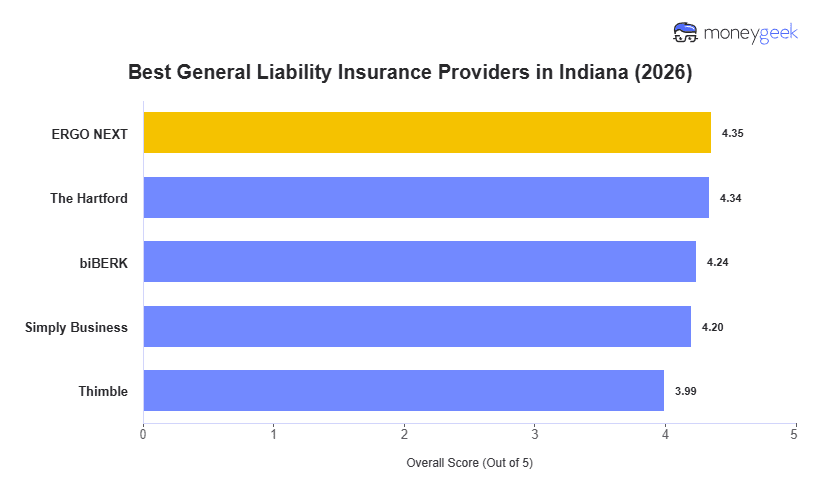
    Read more about the best: Best General Liability Insurance in Indiana

    Read more about the cheapest: Cheapest General Liability Insurance in Indiana

  5. 5
    Bind general liability coverage and request a Certificate of Insurance (COI)

    Purchase your policy and request certificates naming required parties as additional insureds. Indianapolis retail leases, Lafayette manufacturing contracts and Brown County event permits each demand specific wording. Missing endorsements delay vendor approvals and project starts.

    Property managers and contractors verify coverage before approving operations. Automotive suppliers need additional insured status for plant access, while State Fair and Indy 500 vendors need event organizer endorsements. Incomplete certificates delay construction starts, vendor onboarding and seasonal openings across Indiana.

General Liability Insurance in Indiana: Next Steps

You can't sign an Indianapolis retail lease, ship parts to Lafayette automotive plants or sell at Brown County fall festivals without general liability insurance. Commercial landlords, manufacturing clients and event organizers verify coverage limits before letting you operate.

If you're buying coverage to meet a requirement

If you're unsure how much coverage you need

If you're comparing quotes from multiple carriers

If you operate seasonally

If you've had a claim or violation

Get General Liability Insurance Quotes

After checking your requirements, compare general liability insurance quotes to find the best deal. MoneyGeek's tool helps you get matched to providers specializing in your business.

About Connor Bolton


Connor Bolton headshot

Connor Bolton is Senior SEO and Content Manager at MoneyGeek, where he leads the business and pet insurance editorial teams. As editorial lead for both verticals, Connor sets the research framework, data standards, and content structure that his writers execute, directly authoring in-depth guides himself and reviewing all team content for accuracy and practical value before it goes live. With over four years evaluating insurance products across personal, commercial, and specialty lines, he brings cross-vertical knowledge to every guide the team produces.

Connor architected MoneyGeek's insurance research infrastructure across all major verticals including auto, home, renters, life, health, business, and pet, building systems for pricing analysis, provider-level research, customer experience evaluation, and coverage analysis with AI support. The infrastructure includes over 6 million data points for business insurance across 408 industry areas, all 50 states, and 16 vehicle types, and over 5 million pet insurance profiles across 18 major providers and hundreds of breed and age combinations. Connor's insurance cost research and his team's work has been cited by the U.S. Chamber of Commerce, Allstate, Liberty Mutual, CBS News, Forbes and LegalZoom.

Beyond the data, Connor stays connected to how the market actually operates, drawing on direct conversations with underwriters and carrier liaisons at Ethos, The Hartford, NEXT Insurance, Nationwide, and State Farm, and monitoring business and pet owner communities including Reddit, to inform how he interprets findings and frames guidance for real buyers.

He is the direct editorial contact for methodology questions at connor@moneygeek.com and can be found on LinkedIn.