
Car Repair Insurance: Cost, Companies & Coverage (2026)


Updated: August 6, 2026

Advertising & Editorial Disclosure

Key Takeaways: Auto Repair Insurance
blueCheck icon

Car repair insurance is an add-on to your existing auto policy that costs $35 to $95 a year ($3 to $8 a month) on top of what you already pay. It works with minimum or full coverage. GEICO is cheapest; AAA has the widest eligibility window.

blueCheck icon

MBI is worth buying if your factory warranty has expired, your car is 2 to 12 years old, and a $2,000 repair would strain your budget. Otherwise, self-insuring is the better call.

blueCheck icon

Car repair insurance covers sudden mechanical and electrical failures but not routine maintenance, wear and tear, accident damage or your lender's full coverage requirement.

Car Repair Insurance Companies: Cost, Coverage & Eligibility

GEICO charges the least at $35 a year, but only covers brand-new cars under 15 months old with under 15,000 miles. AAA charges more at $59 to $89 a year, but covers cars up to 12 years old. The right provider depends less on price and more on whether they'll write a policy for your car in the first place. Check eligibility before you compare rates.

The eligibility column matters more than the price column for most readers. GEICO is cheapest, but if your car is more than 15 months old, GEICO won't sell you a policy. Allstate has the same cutoff. Progressive opens the door much wider, covering cars up to 15 years old, and AAA covers the oldest vehicles at up to 12 years or 175,000 miles. Start by checking your car's age: if it's under 15 months old, GEICO is where to start. Between 15 months and 12 years, compare Progressive and AAA. Over 12 years or past 175,000 miles, skip MBI entirely and look at extended warranty options instead.

GEICO
$35–$85
$3–$7
$250
Under 15 months; under 15,000 miles; first owner
Engine, transmission, electrical, A/C, steering
Fastest claims: avg 3.2 days; avg payout $1,623 per breakdown
Progressive
$40–$85
$3–$7
$100, $200, $500
Up to 15 years old; under 100,000 miles
Engine, transmission, brakes, electrical, roadside
Broadest eligibility window of any national insurer
Allstate
$45–$95
$4–$8
$50, $100, $250
Under 15 months or 15,000 miles
Up to 127 components across multiple tiers
Most coverage tiers; trip interruption included
AAA
$59–$89
$5–$7
$100, $250
Up to 12 years or 175,000 miles
Engine, transmission, electrical, roadside
Widest age window; best for vehicles past GEICO or Allstate cutoff

Car Repair Insurance Coverage

Car repair insurance covers the components that make your car move and operate, specifically things that break unexpectedly rather than wear out gradually. Mechanical failures are problems inside the engine, transmission or drivetrain. A piston that cracks, a transmission gear that seizes, a fuel pump that stops delivering gasoline to the engine. Electrical failures are problems with the systems that power your car's functions. An alternator that stops charging the battery, a starter motor that won't turn the engine over, wiring faults that knock out sensors or electronics.

What it does not cover is anything predictable. Routine maintenance like oil changes, brake pads, tires and timing belts wear out on a schedule and are your responsibility regardless of coverage. Accident damage such as a bent frame, a cracked bumper or a broken axle from hitting a pothole is handled by collision or comprehensive, not MBI. A claim on a deferred maintenance failure (engine damage from skipped oil changes, for example) or a worn consumable part will be denied.

What Car Repair Insurance Covers

MBI covers sudden mechanical and electrical failures. These are components that stop working on their own, not because of an accident, deferred maintenance or normal wear.

Engine components
Pistons, valves, gaskets
Transmission system
Gears, clutches, hydraulic components
Drivetrain
Drive shafts, axles, differential components
Fuel system
Fuel pumps, injectors, filters
Exhaust system
Catalytic converters, mufflers, pipes
Electrical systems
Alternators, starters, wiring
Power steering
Pumps, racks, steering components
Brakes (sudden failure only)
Brake calipers, master cylinder, ABS components; not brake pads or rotors worn from use
Heating and cooling
A/C compressor, condenser, heater core

One important limit to know if your car is financed or leased: mechanical breakdown insurance does not satisfy your lender's coverage requirement. Most auto loan and lease agreements require you to carry collision coverage (which pays for damage from accidents) and comprehensive coverage (which pays for theft, weather damage and vandalism). Mechanical breakdown insurance only covers sudden mechanical failures unrelated to accidents. If you add MBI but drop collision or comprehensive on a financed vehicle, you are in breach of your loan agreement and your lender can force-place coverage on your behalf, usually at a much higher cost.

mglogo icon
RECALL MONITORING

Vehicle manufacturers notify you of safety recalls through mail to your registered address. Verify recall status online using the 17-digit Vehicle Identification Number (VIN) found on your windshield or registration. Several online services provide automatic recall alerts when you register your vehicle information.

Is Car Repair Insurance Worth It?

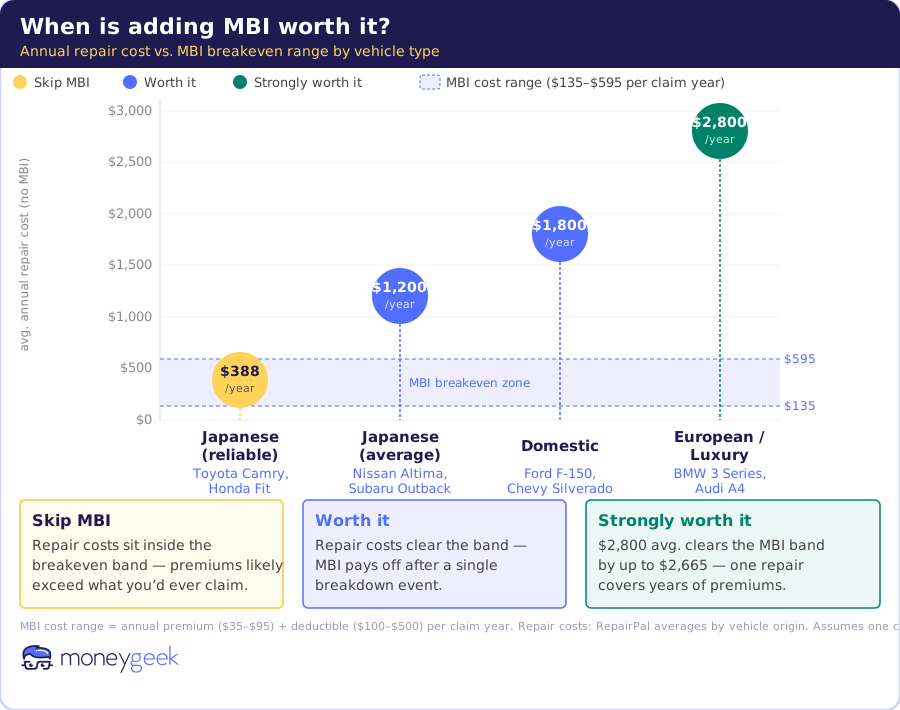
Car repair insurance is worth it if you drive a two to eight-year-old vehicle, have less than $3,000 in emergency savings, and your car model has a history of expensive repairs. It's not worth it if you have $5,000 or more saved, drive a reliable model like the Toyota Camry, or your car is still under the factory warranty.

Image showing when MBI is worth it based on vehicle category, MBI premium, and repair costs.

Who Should Get Car Repair Insurance?

Car repair insurance makes sense for drivers with expired warranties, luxury vehicles or limited savings for unexpected repairs.

  • carInsurance icon

    Your warranty expired

    Once your manufacturer warranty ends, you're responsible for all repair costs. Car repair insurance fills this gap, covering major mechanical failures that would otherwise cost thousands out-of-pocket.

  • money2 icon

    You drive a luxury or foreign vehicle

    European and luxury brands carry repair bills 40-60% higher than domestic vehicles. A BMW transmission replacement runs $5,000-$8,000, while a Honda costs $2,500-$4,000. Car repair insurance caps your maximum expense regardless of the actual repair bill.

  • accident2 icon

    You can't cover a $2,000 repair tomorrow

    Major failures happen without warning. If a $2,000-$3,000 repair would strain your budget, car repair insurance converts unpredictable expenses into fixed monthly payments you can plan for.

  • insuranceCheck icon

    Your car has 60,000+ miles

    Vehicles with higher mileage face increased breakdown risk as components age. Car repair insurance becomes more valuable after your odometer passes 60,000 miles, when transmission, engine and electrical problems become common.

Factors to Consider Before Purchasing Car Repair Insurance

Car repair insurance runs $35 to $95 annually but saves thousands on major breakdowns. Weigh your vehicle's age, emergency savings and car model reliability when deciding if coverage makes sense. Evaluate these factors:

Vehicle age

2 to 8 years old; warranty expired but coverage still available

Emergency fund
Less than $3,000 saved for unexpected repairs
Vehicle reliability
High-repair models like German luxury cars or CVT transmissions
Annual premium
Keep premiums under 2% of your car's current value
Repair complexity
European cars average $2,800/year in repairs vs. $1,200 for Japanese models
Risk tolerance
Prefer predictable monthly costs over surprise repair bills

Compare Auto Insurance Rates

Ensure you are getting the best rate for your insurance. Compare quotes from the top insurance companies.

Mechanical Breakdown Insurance (MBI) vs. Extended Warranty

Mechanical breakdown insurance (MBI), or also widely known as car repair insurance, is an add-on to your auto policy. An extended warranty is a service contract, sold by dealerships, that covers repairs after the manufacturer's warranty expires.

Car repair insurance, extended warranties and vehicle service contracts (VSCs) all protect against expensive mechanical failures but work differently and cost different amounts. Most car insurance companies offer mechanical breakdown insurance only for newer cars under two years old.

Planning to keep your car long-term? An extended warranty offers more protection after the manufacturer's warranty expires. Understanding these differences helps you pick the right financial protection.

Feature
Car Repair Insurance
Extended Warranties
Vehicle Service Contracts

Coverage

Sudden mechanical breakdowns only

Covered mechanical failures

Mechanical failures and sometimes routine maintenance

Cost

$40–$95 annually + deductibles

$1,200–$3,000 + deductibles

$1,500–$4,000

Claims Process

File online/phone, choose repair shop

Pre-authorization required

Must contact the dealership or the administrator of the policy

Repairs

Any licensed shop or network

Approved shops only

Manufacturer dealerships

Key Benefits

Bought through insurance companies and added to the bill, flexible payment options

Sold through dealerships and warranty companies, paid in a lump sum but monthly payments are sometimes available

Sold exclusively through car dealer ships and can be rolled into loan payments

How to Get Car Insurance to Pay for Car Repair

To file a claim and get reimbursed, follow these steps:

  1. 1
    Confirm your coverage

    Check your policy or call your insurer to verify that the car breakdown is covered. You need to also verify your deductible amount before proceeding.

  2. 2
    Get a diagnosis

    Visit a licensed repair shop to get an estimate of repair costs. This should be in written format.

  3. 3
    File a claim

    Contact your insurance company and submit the repair estimate, photos and any required documentation. Most insurers accept these through an online portal or over the phone.

  4. 4
    Pay the deductible

    Once approved, pay your deductible to the repair shop or insurer. Deductibles are $100 to $500, depending on your policy.

  5. 5
    Complete the repairs

    Your insurer will pay the repair shop directly or reimburse you after the repairs are done.

Car Repair Insurance vs. Other Types of Coverages

Car repair insurance protects against unexpected repair costs. Many car insurance companies offer mechanical breakdown insurance for newer cars, under two years old. If you plan to keep your car for many years, an extended warranty might offer more protection after the manufacturer's warranty ends.

The table below highlights the main differences between car repair insurance, extended warranties and standard auto insurance.

Aspect
Car Repair Insurance
Extended Warranty
Collision and Comprehensive Insurance

Purpose

Covers specific car repairs not related to accidents

Extended service contract for car repairs after manufacturer's warranty

Covers damage to your car from accidents, theft or natural events

Coverage

Major mechanical parts like the engine and transmission

Defects in materials and workmanship, specific parts

Accident damage, theft, natural disasters, vandalism

Cost factors

Car model, age, mileage, coverage level

Included in car purchase or as an additional cost for extended warranties

Car value, driving record, location, coverage limits

Typical duration

Ongoing, usually renewable annually

Limited time or mileage, e.g., three years or 36,000 miles

Typically annual, renewable

Payment method

Integrated into insurance premiums with flexible payment schedules

Often requires upfront payment or financing through vehicle loan

Standard insurance billing cycles

Extended Warranty Car Repair Options

The table lists companies with plans and benefits to help you manage expensive repairs:

Company
Offer

Endurance

Covers engine, transmission, electrical systems and more, with 24/7 roadside assistance, rental car benefits and trip interruption coverage

CarShield

Provides multiple plans, from basic to comprehensive, flexible payment options and allows the choice of a repair facility

Mechanical Breakdown Insurance: Bottom Line

Compare providers to find affordable car repair insurance. We analyzed coverage options, exclusions, cost factors and top providers. GEICO, Allstate and Progressive offer reliable, budget-friendly repair plans.

Compare Auto Insurance Rates

Ensure you are getting the best rate for your insurance. Compare quotes from the top insurance companies.

Auto Repair Insurance: FAQ

Find answers to common questions about car repair insurance, including what it covers, costs and benefits.

Car Repair Insurance Companies: Our Review Methodology

Car repair insurance fills a gap between standard collision coverage and extended warranties. We evaluated providers based on what matters when your transmission fails or your engine seizes: claim speed, coverage breadth and price.

We analyzed hundreds of car insurance companies using data from AM Best (financial stability), J.D. Power (customer satisfaction), NAIC (complaint ratios) and Quadrant Information Services (pricing data). This multi-source approach reveals which insurers pay claims fast and which ones make you wait.

Our scoring weights the factors that matter during breakdowns: Claims processing speed (how quickly you get your car back), coverage comprehensiveness (which components are protected) and affordability (annual premium costs). A low premium means nothing if the insurer takes three weeks to approve a transmission repair.

Coverage details came from policy documents and provider disclosures. We compared deductible options, vehicle age limits, mileage restrictions and component lists to identify which insurers offer the most protection for drivers with expiring warranties or high-mileage vehicles.

MoneyGeek's editorial standards prioritize clarity and usefulness. Our editorial team conducts rigorous editing, fact-checking and review to ensure accuracy and reliability.

Mechanical Breakdown Insurance: Related Articles

About Mark Fitzpatrick


Mark Fitzpatrick, Licensed P&C Insurance Expert, MoneyGeek

Mark Fitzpatrick, a licensed Property and Casualty (P&C) Insurance Producer in Connecticut, is MoneyGeek's resident expert in insurance and economics. He has spent nearly a decade covering the market, first at LendingTree and now at MoneyGeek, where he analyzes hundreds of carriers and millions of rates across auto, home, renters, health and life insurance.

His work has appeared in The Washington Post, The New York Times and NPR. He draws on independent cost and consumer experience data, and no insurance company partnerships affect his recommendations.

Mark studied at Boston College before earning a master's in economics and international relations from Johns Hopkins University. Before MoneyGeek, he worked in financial risk management at State Street. He's also a five-time “Jeopardy!” champion.


Sources