Which Cities Have the Best and Worst Commutes in America?

Advertising & Editorial Disclosure

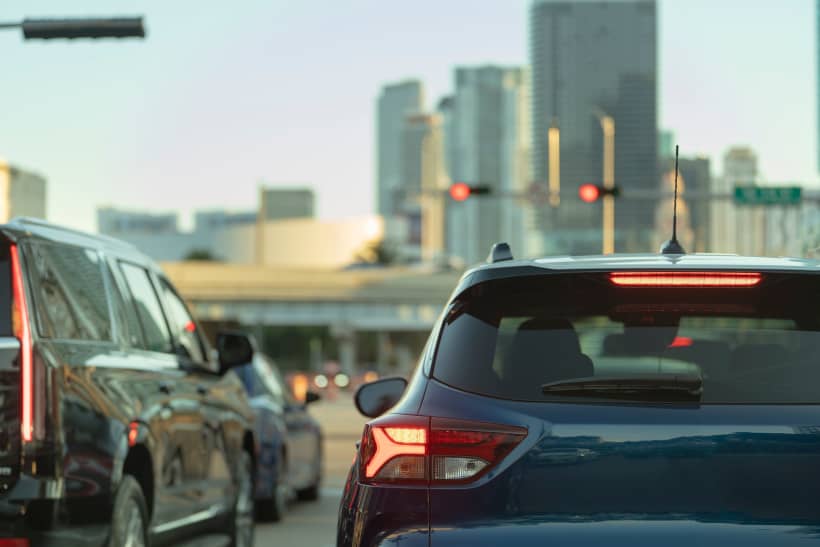
Cars stopped at a red light in city traffic.

American commutes can range from 15-minute drives in Jacksonville, North Carolina, to 41-minute crawls through New York traffic. Location determines whether workers deal with minimal delays or real headaches from crash risks, fuel costs and gridlock that adds 50% to travel times during peak hours.

We crunched the numbers across major U.S. cities using composite scores that factor in travel time, crash rates, fuel expenses and traffic congestion levels. The results show California cities accounting for seven of the 10 worst spots, while small Southern and Midwestern markets post the most manageable commuting experiences. Most have Travel Time Indexes around 1.1.

mglogo icon
KEY TAKEAWAYS
  • California cities claim seven of the 10 worst commute spots, while smaller metro areas like Columbia, South Carolina, and Jackson, Michigan, lead the best rankings.
  • Rush hour gridlock can triple normal travel times. New York traffic crawls to 22 mph during peak hours and Chicago to 25 mph.
  • Commuting fuel costs vary by 308% nationally, from $217 a year in Norfolk, Nebraska, to $886 in Vallejo-Fairfield, California.
  • The most congested road segments, like Stamford's southbound I-95, cost commuters over 150 hours a year in lost time, equivalent to nearly four work weeks.

Cities With the Worst Commutes

California accounts for seven of the top 10 worst commute rankings. Los Angeles leads with a composite score of 0.72. High morning crash rates and heavy congestion push the Travel Time Index to 1.5. Trips take 50% longer during peak hours than under free-flow conditions.

The problems vary by city. San Francisco has the highest fuel costs at $848 a year. San Jose has the highest morning crash rate at 1.0 per 100,000 commuters.

10 Cities With the Worst Commutes in the US
City and State
Morning Crash
Avg Commute Time
Annual Fuel Cost
Travel Time Index
Composite Score

1.

Los Angeles, CA

0.68

31

783

1.5

0.72

2.

San Francisco, CA

0.30

31

848

1.48

0.71

3.

Long Beach, CA

0.08

31

783

1.5

0.69

4.

Oakland, CA

0.15

30

815

1.48

0.68

5.

Riverside, CA

0.30

32

785

1.37

0.64

6.

Chicago, IL

0.31

34

745

1.3

0.6

7.

San Jose, CA

1.00

28

743

1.35

0.59

8.

Honolulu, HI

0.60

27

676

1.41

0.57

9.

San Bernardino, CA

0.15

29

713

1.37

0.56

10.

Newark, NJ

0.44

33

609

1.32

0.55

California's concentration at the top reflects sprawling metro areas, high gas prices and dense traffic. But gridlock isn't a West Coast problem alone.

Chicago ranks sixth nationally with the longest average commute time at 34 minutes. Newark, New Jersey, rounds out the top 10 with high morning crash rates, which also factor into local car insurance costs.

Some cities with short commute times still rank poorly. San Jose averages just 28 minutes, but high crash rates drive up its composite score. Honolulu's 27-minute average is undercut by moderate crash rates and traffic delays that stretch travel times 41% during peak hours.

Cities With the Worst Gridlock

New York leads the nation in commute agony. Drivers spend 41 minutes in traffic that drops to 22 mph during rush hour. Chicago (34 minutes, 25 mph) and Philadelphia (32 minutes, 27 mph) round out the three worst cities for gridlock.

All three exceed the national average commute time of 26.6 minutes by at least five minutes.

10 Cities With the Worst Commute Agony Scores in the US
City and State
Average Commute Time
Worst Speed Drop (mph)

1.

New York, NY

41

22

2.

Chicago, IL

34

25

3.

Philadelphia, PA

32

27

4.

San Francisco, CA

31

20

5.

Los Angeles, CA

31

32

Speed drops worst between 4 p.m. and 6 p.m. for nine of the 10 cities. Baltimore is the exception. Its sharpest slowdown hits during the 8 a.m. to 9 a.m. morning commute.

Extended travel times and slower speeds raise fuel costs and vehicle wear for commuters in these cities. Higher accident exposure in gridlocked corridors also pushes insurance premiums up.

Cities With the Highest and Lowest Commuting Fuel Costs

Vallejo-Fairfield, California, has the highest average fuel cost for commuters at $886 a year. Other major California metro areas, including San Francisco, Oakland and Los Angeles-Long Beach, fill most of the top 10, alongside high-cost metros like New York and Chicago.

The high costs reflect longer commute distances and above-average gas prices in major metro areas.

blueCheck icon
Highest Gas Costs
  1. Vallejo-Fairfield, CA: $886
  2. San Francisco, CA: $848
  3. Oakland, CA: $815
  4. Riverside, CA: $785
  5. New York, NY: $784
  6. Los Angeles-Long Beach, CA: $783
  7. Modesto, CA: $763
  8. Chicago, IL: $745
  9. San Jose, CA: $743
  10. Salinas, CA: $732
blueCheck icon
Lowest Gas Costs
  1. Norfolk, NE: $217
  2. North Platte, NE: $220
  3. Columbus, NE: $226
  4. Wichita Falls, TX: $226
  5. Marquette, MI: $238
  6. Abilene, TX: $238
  7. Lawton, OK: $245
  8. Jacksonville, NC: $245
  9. Durango, CO: $246
  10. Grand Forks, ND: $246

Despite nationwide fluctuations in fuel prices, smaller cities in Nebraska, Texas and the Midwest consistently offer the lowest fuel costs. These areas have shorter average commute times, often under 20 minutes, and cheaper gas prices that hold annual commuting fuel expenses well below $250.

car2Colored icon
PUBLIC TRANSIT VS. DRIVING

Public transit cuts commuting costs sharply. The average U.S. household spends about $2,449 a year on gasoline, more than electricity, natural gas and fuel oil combined. Recent data shows switching to public transit can reduce commuting costs by up to $13,000 a year, counting fuel, insurance and vehicle maintenance.

The financial case extends beyond fuel. Cities with strong transit systems also see lower traffic fatality rates, reduced emissions and more energy-efficient commuting. Where transit is available, it is a practical, lower-cost alternative.

Cities With the Most Dangerous Commutes

Memphis, Tennessee, logs the most dangerous morning commute in America at 4.33 fatal crashes per 100,000 residents. Albany, Georgia (4.13), and Tucson, Arizona (3.98), round out the top three most dangerous metropolitan areas for commuters.

10 Cities With the Most Dangerous Commutes in the US
Metropolitan Statistical Area
Morning Commute Crash Rate

1.

Memphis, TN

4.33

2.

Albany, GA

4.13

3.

Tucson, AZ

3.98

4.

Cleveland, TN

3.78

5.

Columbus, IN

3.54

America's Most Congested Commute Corridors

The most congested roads in the U.S. cluster in major metro areas, including Chicago, New York City and Stamford. INRIX 2024 Global Traffic Scorecard ranks routes by total hours lost to congestion each year. Drivers on Stamford's southbound I-95 lost an average of 151 hours in 2024, the highest in the country.

10 Most Congested Cities in the US
Urban Area
Road Segment
From → To
Peak Hour
Hours Lost

1.

Stamford, CT

I‑95 SB

Westport → Indian Field Road

8:00 AM

151

2.

Boston, MA

I‑93 SB

Charles River → Pilgrim’s Highway

3:00 PM

109

3.

Dallas, TX

US‑80 EB

I‑635 → Forney, TX

5:00 PM

88

4.

New York, NY

I‑278 BQE WB

I‑495 Interchange → Tillary Street

4:00 PM

85

Stamford ranks first. Chicago accounts for five of the top 10 spots. Deep congestion hits multiple expressway corridors during morning and late afternoon rush hours. Some segments lose over 30 minutes of travel time a day. In areas with few alternative routes or transit options, those delays compound fast.

workplace icon
THE RETURN-TO-OFFICE EFFECT

Remote work cut average commute time by 55 minutes a day in the U.S. As more companies call employees back, commuters are spending that time on the road again.

Public transit ridership has climbed back to 85% of pre-pandemic levels, according to the American Public Transportation Association (APTA), even with office occupancy still below 60%. Cities with reliable transit networks are absorbing the bulk of that returning commuter demand.

Cities With the Best Commutes

Small and mid-sized cities across the South and Midwest post the nation's most manageable commutes. Columbia, South Carolina, and Jackson, Michigan, share the top spot with a composite score of 0.08. Jackson earns its ranking with a 16-minute average commute. Columbia averages 17 minutes but offsets that with lower annual fuel costs at $290 a year.

Top-ranked cities post Travel Time Indexes around 1.1, putting rush hour at just 10% longer than free-flow travel. Morning crash rates stay below 0.5 per 100,000 commuters in eight of the 10 cities.

10 Cities With the Best Commutes in the US
City and State
Morning Crash
Avg Commute Time
Annual Fuel Cost
Travel Time Index
Composite Score

1.

Columbia, SC

0.46

17

290

1.1

0.08

2.

Jackson, MI

0.62

16

304

1.1

0.08

3.

Jacksonville, NC

0.47

15

245

1.19

0.09

4.

Rochester, MN

0.43

17

310

1.11

0.09

5.

Springfield, MO

1.21

18

279

1.09

0.13

Jacksonville, North Carolina, has the shortest commute at 15 minutes. Cities like Grand Rapids, Michigan, and Buffalo, New York, average 19-minute commutes and carry fuel costs above $360 a year, but minimal traffic delays and low crash rates still place them in the top 10.

Springfield, Missouri, has the highest morning crash rate (1.21) among the best commute cities, but affordable fuel costs and light congestion keep its overall ranking strong. No single factor determines commute quality. Many also rank among the most affordable in the U.S. Low commute times come with lower overall costs of living.

FAQ: Best and Worst Commutes

The data below covers state-level road quality and public transit rankings.

Who has the worst traffic in America?

Which U.S. state has the shortest one-way commute to work?

What state commutes the most?

What cities have the fastest commutes?

What is the happiest commute time?

Which states have the best roads?

Which states have the best public transportation?

Methodology

MoneyGeek ranked 124 metropolitan statistical areas with labor forces of 200,000 people or more for transportation quality across four equally weighted factors.

We analyzed U.S. Census Bureau data for commute times, National Highway Traffic Safety Administration crash data for morning hours (6 a.m. to 9 a.m.), AAA gas prices for fuel costs and U.S. Bureau of Transportation Statistics data for traffic congestion.

Full Dataset

A higher composite score indicates worse transportation conditions. The score combines four factors, each weighted equally at 25%:

  • Morning crash rate: The average yearly number of fatal crashes during morning commute hours (6 a.m. to 9 a.m.) from 2019 to 2023 per 100,000 residents, measuring safety risk during peak travel.
  • Average commute time: The one-way travel time to or from work for each metro area.
  • Annual fuel cost: The estimated yearly fuel cost for commuting, calculated using average commute distance, 24 mpg vehicle efficiency and local gas prices.
  • Travel time index: A congestion measure comparing peak-period travel time to free-flow travel time. A TTI of 1.30 means a trip takes 30% longer during peak hours than under ideal conditions. Higher values indicate more severe congestion.

We normalize each metric on a zero-to-one scale with min-max normalization, then combine them into the composite score.

Rankings use precise composite score calculations to multiple decimal places, so cities with identical displayed scores may have different ranks due to rounding.

City and State
Morning Crash
Avg Commute Time
Annual Fuel Cost
Travel Time Index
Composite Score
Rank

Tennessee - Memphis

4.33

21

356

1.13

0.4

100

Georgia - Albany

4.13

20

335

1.12

0.36

89

Arizona - Tucson

3.98

22

383

1.14

0.42

104

Tennessee - Cleveland

3.78

21

340

1.13

0.37

90

Indiana - Columbus

3.54

18

332

1.18

0.34

77

California - Chico

2.88

20

511

1.3

0.47

111

New Mexico - Albuquerque

2.59

22

363

1.16

0.34

76

North Carolina - Greensboro

2.5

22

373

1.12

0.31

66

Georgia - Columbus

2.47

20

346

1.18

0.31

65

Louisiana - Baton Rouge

2.38

21

345

1.23

0.35

80

Florida - Jacksonville

2.33

24

439

1.19

0.4

99

Missouri - Columbia

2.28

17

280

1.1

0.18

24

About Rachel Newcomb, PhD


Rachel Newcomb, Professor of Anthropology, Researcher

Dr. Rachel Newcomb is an award-winning writer and the chair of anthropology at Rollins College. She has over two decades of research experience both internationally and domestically. She has published multiple books and articles on USA Today, HuffPost, The Economist and The Washington Post. She also contributes finance articles to MoneyGeek.

Dr. Newcomb earned her doctorate in anthropology from Princeton University.


Sources