Best Pet Insurance for Senior Cats





Updated: September 17, 2026
Advertising & Editorial Disclosure
Best Pet Insurance Companies for Senior Cats
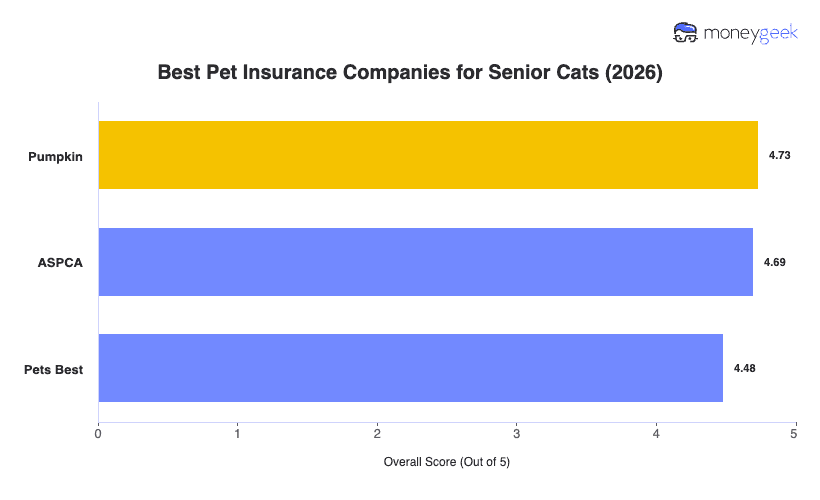
Based on my analysis, the top pet insurance providers for senior cats are:
- Choose if you want the best value and excellent customer service: Pumpkin
- Choose if you want the broadest coverage for chronic conditions: ASPCA
- Choose if you want the best coverage for dental disease: Pets Best
To identify the best options, I compared major providers based on their policy terms, particularly waiting periods, pre-existing condition rules and enrollment eligibility, as well as their coverage for age-related accidents and illnesses common to senior cats. I also analyzed each one’s average rates and customer service for buying, policy management and claims.
To find the best pet insurance for senior cats aged 11 to 14, we evaluated affordability, customer experience and coverage across 18 major pet insurers using more than 67,000 senior cat profiles, covering mixed breeds and purebreds in all 50 states and Washington, D.C. Every provider was compared against the same base profile: an 11-year-old Ragdoll with a $5,000 annual limit, $500 deductible and 80% reimbursement rate, so the comparisons stay apples-to-apples.
We compared pricing across breeds and locations, tracked customer experience from enrollment through claims and scored coverage quality specifically for the health risks senior cats have. Affordability counts for 50% of the overall score, customer experience for 30% and coverage options and terms for 20%.
See the full methodology for the complete metric breakdown and scoring approach.

Pumpkin: Best Senior Cat Insurance Overall
Exceptional customer service
Expedited claim reviews and reimbursements
Broad base coverage for senior cat conditions
Curable conditions coverage
Flexibility for customizing policies
14-day waiting period for accidents
Pumpkin is my pick for the best senior cat insurance overall on the strength of its customer experience, saving 44% against the national average at $43 a month while backing that up with a claims service that's easy to submit through, fast to approve and consistently fair. Its base plan covers exam fees, prescription medications, alternative therapy and chronic conditions after a 14-day waiting period, which helps cut the out-of-pocket cost of the ongoing veterinary care, medications and follow-up visits senior cats often need.
But Pumpkin's coverage options are limited to two reimbursement rates and four deductibles and annual limits, so you won't have much room to adjust your policy if you're trying to balance premiums against the likelihood of frequent claims.
Learn more: Pumpkin Pet Insurance Review
ASPCA: Best Senior Cat Insurance for Chronic Kidney Disease
Cheapest rates on average
Broad coverage for chronic illnesses
Wide range of coverage options
Service not as streamlined for policy management
No waiver for waiting periods
ASPCA is my pick for the best senior cat insurance for chronic kidney disease. At $42 a month, it's the cheapest of my three recommendations. It's 50% below the national average, and it backs that up with coverage that fits the disease directly: exam fees, prescription medications, prescription pet food and supplements, and alternative therapy are all included, which cuts the upfront cost of the repeated vet visits, renal diets and supportive treatments chronic kidney disease usually requires.
However, ASPCA's claims process ranks in the bottom tier of my analysis, so senior cat owners managing an ongoing condition may experience waiting longer for reimbursement than they would with a higher-ranked provider.
Learn more: ASPCA Pet Insurance Review

Pets Best: Best Senior Cat Insurance for Dental Disease
Dental illness coverage in base plan
Direct vet payment option
Frequent issues with claims service
Exam fees and alternative therapy require add-ons
Pets Best is my pick for the best senior cat insurance for dental disease. Its base plan covers dental disease at no extra cost, including tooth extractions and endodontic treatments for canine and carnassial teeth, and it extends to tooth extractions for advanced periodontal disease or severe tooth resorption to relieve chronic pain and stop the disease from spreading to surrounding tissue.
That said, Pets Best's claims submission process runs into issues often enough that reimbursement can be delayed, which matters more for senior cats needing recurring care for chronic illness or multiple dental procedures.
Learn more: Pets Best Pet Insurance Review
Compare Senior Cat Insurance Coverage Terms
Many pet insurers offer similar accident and illness plans on paper, but policy terms determine how much of that coverage reaches your senior cat. The table below compares providers by the terms that are especially relevant as cats age, including chronic and curable conditions, cancer, dental disease, medications, exam fees and end-of-life care. Comparing these features can help you identify companies that are better suited to the recurring treatments, ongoing medications and age-related health needs your cat may have over time.
✓ | ✓ | ✓ | ✓ | ✓ | |
Chronic illnesses | ✓ | ✓ | ✓ | ✓ | ✓ |
Curable conditions | ✓ | ✓ | ✓ | ✗ | ✓ |
✓ | ✓ | ✗ (requires an add-on) | ✗ | ✓ | |
✓ | ✓ | ✓ | ✓ | ✓ | |
Prescription food and supplements | ✓ | ✓ | ✗ | ✓ | ✓ |
✓ | ✓ | ✓ | ✓ | ✓ | |
Alternative therapies | ✓ | ✓ | ✗ (requires an add-on) | ✓ | ✓ |
Euthanasia and end-of-life expenses | ✓ | ✓ | ✗ (euthanasia only) | ✓ | ✓ |
Cheapest Pet Insurance Companies for Senior Cats
The lowest-cost pet insurance plans for senior cats are offered by the following companies:
- ASPCA: ASPCA offers the cheapest senior cat insurance overall, averaging $42 per month and saving you 50% compared to the national average. It's also the lowest-cost option for senior cat owners in the West, Midwest, Northeast and Mid-Atlantic, with rates that are 27% to 57% lower than the state averages.
- Pumpkin: At an average of $43 monthly, Pumpkin is the second-most affordable senior cat insurer, with savings of 44% against the national benchmark. The company also offers the lowest rates for Birmans, Norwegian Forest Cats, Ragdolls and Tonkinese cats.
- Liberty Mutual: Liberty Mutual costs an average of $50 per month, which is 23% lower than the national benchmark. It also provides the lowest senior cat insurance rates for Australian Mists, Cornish Rexes, Maine Coons, Serengeti cats and Siberians.
ASPCA | $42 | $499 | 50% |
Pumpkin | $43 | $518 | 44% |
Liberty Mutual | $50 | $605 | 23% |
How Much Does Senior Cat Insurance Cost?
The average cost of pet insurance for senior cats is $62 per month ($746 annually). This rate reflects a policy for an 11-year-old Ragdoll with a $5,000 annual limit, $500 deductible and 80% reimbursement rate. Your rate will vary based on your senior cat's breed, location and the coverage level you choose. So, I've provided a pet insurance cost calculator below so you can get a more closely aligned estimate for your senior cat.
Is Senior Cat Insurance Worth it?
Senior cat insurance is worth it if your cat is still relatively healthy or has few documented conditions that would get excluded as pre-existing. Because pet insurance only pays out for conditions that develop after your waiting periods end, the more health issues your cat already has going in, the less financial protection a new policy provides.
If your senior cat is relatively healthy at enrollment, pet insurance can provide broader coverage against these common senior cat health issues that may develop later, with average costs based on MoneyGeek’s vet cost data:
- Arthritis: $363 to $2,426
- Diabetes: $354 to $2,831
- Heart disease (hypertrophic cardiomyopathy): $566 to $4,246
- Chronic kidney disease: $354 to $4,246
- Cancer (lymphoma): $3,639 to $18,198
- Periodontal disease: $394 to $2,628
- Hyperthyroidism: $515 to $5,156
After determining whether a policy is worth it for your senior cat, decide on your pet insurance coverage needs with MoneyGeek's tool below. Enter your pet's species, breed, location and age to get recommendations on annual limits, reimbursement rates and deductibles before collecting quotes.
Use this calculator to get pet insurance coverage recommendations by entering your pet's species, breed, state and age.

What is your pet type?
Best Senior Cat Insurance Buying Checklist
This checklist covers the process from reviewing your cat's medical records to comparing quotes from multiple insurers. Work through each step below, or download the PDF version to fill out as you narrow your options.
Download: Senior Cat Insurance Buying Checklist
 Review your cat's medical records
Request a complete copy of your cat's records from every clinic you've visited, including exam notes, diagnoses, lab results, imaging reports and prescription history. List any diagnosed conditions, recurring symptoms or recommendations for future monitoring, since insurers review this history to decide what counts as pre-existing.
- Talk to your veterinarian
Schedule a visit specifically to discuss your cat's long-term health outlook, not just current concerns. Review the records together and ask which diagnosed conditions your vet expects insurers to treat as curable versus incurable, and whether your cat's age, breed or history put it at higher risk for chronic kidney disease, hyperthyroidism, diabetes, dental disease or arthritis. Before you leave, ask whether an accident-only policy, an accident and illness policy or a comprehensive plan with optional wellness coverage fits your cat's current health and likely veterinary needs.
- Research pet insurance providers
Shortlist insurers that accept new senior cat enrollments and don't limit you to accident-only policies. Download each one’s sample policy and compare the following terms to narrow down your shortlist to insurers whose terms match your cat's medical history:
- Age eligibility: Focus on insurers with no upper age limit at enrollment for comprehensive accident and illness coverage.
- Pre-existing conditions: Confirm that the company has clear definitions, narrower exclusions and transparent medical record reviews that make it easier to understand what will be covered.
- Curable conditions: Find senior cat insurers that allow coverage to be restored after a short symptom-free period, typically 180 days, and have clearly listed qualifying conditions.
- Waiting periods: Look for providers that have short accident and illness waiting periods within 14 days, plus the option to waive orthopedic waiting periods, if available.
- Chronic conditions: Make sure the insurer offers lifetime coverage for eligible chronic conditions as long as the policy remains active and premiums are consistently paid.
- Prescriptions, exams and diagnostics: Find companies with base plans that cover the cost of prescription medications, veterinary exams and diagnostics for eligible accidents and illnesses.
- Dental, rehab and mobility care: Prioritize providers that offer coverage for dental illnesses, physical rehabilitation and mobility therapies without requiring multiple add-ons.
- Read customer reviews
Check Trustpilot, the Better Business Bureau and Reddit for how insurers handle claims in practice. Look specifically at reviews from other senior cat owners about reimbursement speed, medical record reviews, customer support and appeals, since these matter more as cats age and need more veterinary care. Consistent patterns across multiple reviews tell you more than any single sample policy can.
- Get quotes
Collect quotes using the same annual limit, reimbursement rate and deductible across every provider so the comparison is fair. Check whether exam fees, prescription medications, rehabilitation or dental illness are included in the base policy or need an add-on, since a lower advertised premium can end up costing more once those are added. Record each quote so you can compare total costs, coverage differences and exclusions side by side.
Best Senior Cat Insurance: Bottom Line
Pumpkin, ASPCA and Pets Best are my recommendations, but the right choice depends on your cat's medical history, age-related health risks and the coverage you expect to use most. Compare each provider's terms for pre-existing conditions, chronic illness coverage and enrollment eligibility alongside affordability, customer experience and coverage before deciding.
Best Pet Insurance for Senior Cats: FAQ
My analysis found that these three companies offer the best senior cat insurance:
- Pumpkin: Best Senior Cat Insurance Overall
- ASPCA: Best Senior Cat Insurance for Chronic Kidney Disease
- Pets Best: Best Senior Cat Insurance for Dental Disease
ASPCA is the most affordable pet insurance provider for senior cats, averaging $42 per month, which translates to 50% savings compared to the national average.
Senior cat insurance costs an average of $62 per month ($746 annually), based on an 11-year-old Ragdoll with a $5,000 annual limit, $500 deductible and 80% reimbursement rate. How much you’ll pay, however, will vary based on your senior cat's profile and the coverage level you choose.
Senior cat insurance is only worth it when your cat is still healthy and free of pre-existing conditions, as insurers won't cover illnesses diagnosed before enrollment. Note that pet insurance lets you say yes to expensive treatments, like managing chronic kidney disease or fighting cancer, as long as the condition develops after the waiting period ends. Whether your senior cat needs coverage depends on its breed and health status, as well as your location and budget.
To get pet insurance for your senior cat, make sure to review your cat’s medical record with your veterinarian, research providers that offer comprehensive coverage for your cat’s current age, read customer reviews on different platforms and collect quotes from multiple providers.
Pet insurance for senior cats covers eligible veterinary costs for accidents and illnesses that occur after waiting periods, including diagnostics, surgeries, hospitalizations and prescription medications. Coverage varies by insurer, with conditions that develop before enrollment or during waiting periods generally excluded.
Some pet insurers impose upper age limits for new enrollment, while others may limit coverage for certain ages to accidents only. Check each provider's eligibility requirements before choosing a policy for your older cat.
Although you can enroll a senior cat with pre-existing conditions, your insurer won't cover treatment related to those conditions. Your policy will only provide coverage to new, unrelated accidents and illnesses that develop after waiting periods end.
Get Senior Cat Insurance Quotes
If you're ready to compare pet insurance quotes, use MoneyGeek’s tool below to start finding a top provider that fits your senior cat's specific health needs and your budget.
About Ritchel Mendiola

Ritchel Mendiola is a Pet Insurance Content Writer at MoneyGeek. She produces coverage guides, provider comparisons and cost analyses so pet owners can understand their options and avoid overpaying.
Ritchel spent over four years as a News and Feature Writer at Asian Journal Publications, where she reported for the Asian Journal newspaper and Balikbayan Magazine, conducted interviews and covered media events. At MoneyGeek, she covers policy terms, exclusions, waiting periods and reimbursement structures the way she treated news facts. They're sourced, verified and reported accurately rather than summarized from marketing copy.
She joined MoneyGeek in late 2021 in the loans vertical and moved to pet insurance content, which she now leads. Her published work includes provider comparisons, breed-specific cost guides, age-specific coverage analyses and state-level pricing studies, all from the vertical's 5 million pet insurance profiles across 18 major providers and all U.S. states.
LinkedIn: https://www.linkedin.com/in/rianmendi/
Contact Email: ritchel.mendiola@moneygeek.com