

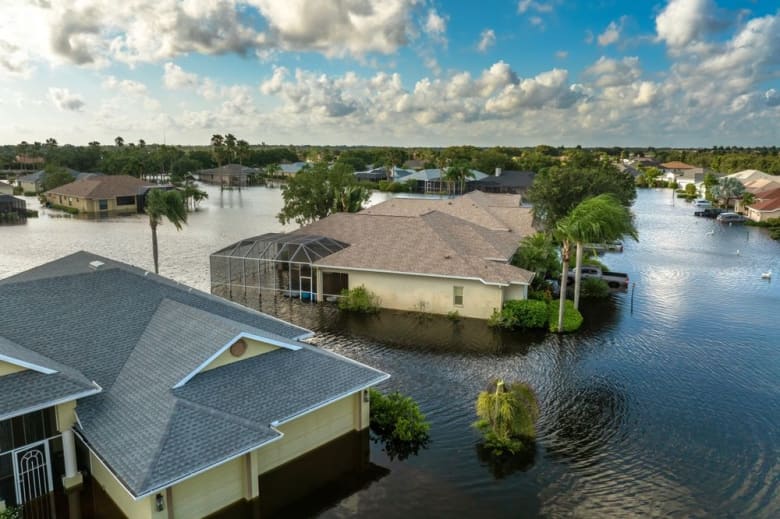
The 100 counties growing fastest in post-pandemic America average $863 in modeled annual disaster losses per resident, nearly triple the $296 average of the 100 slowest-growing counties. Americans aren't fleeing climate risk. They're moving toward it.
MoneyGeek's analysis of IRS migration data and FEMA's National Risk Index shows where that collision is happening: Florida, North Carolina and South Carolina account for 43 of the top 100 high-risk, fast-growth counties. Unlike classic climate migration, in which people flee environmental hazards, this analysis tracks the opposite pattern: in-migration into the nation's most disaster-exposed counties, driven primarily by jobs, housing costs and lifestyle rather than climate alone. For buyers drawn by lower taxes or coastal amenities, that choice also means higher insurance bills, weaker coverage and, in some markets, declining home values.
The data build toward a clear peak. In Horry County, South Carolina, home to Myrtle Beach and sitting in the Atlantic hurricane corridor, residents are arriving at 7.8% annually, one of the fastest rates among high-risk counties in MoneyGeek's analysis. FEMA rates Horry's hurricane risk at 94.4 out of 100. Hurricane Florence struck the region in 2018 and contributed to $24 billion in total damage across affected states.
One hundred miles south, Brunswick County, North Carolina is growing faster still, at 11.7% annually. That rate would quadruple its population in about 12 years if the trend continues. The county carries $1,002 in expected annual disaster losses per resident and hurricane risk scores above 94 out of 100.
Two hundred miles south of that sits Collier County, Florida, the nation's top-ranked county in MoneyGeek's Climate Risk Migration Score. The Gulf Coast county gained residents at 4.5% annually post-pandemic, with $1,001 in annual disaster exposure per resident and near-maximum hurricane, flood and wildfire risk scores. It's the county where migration pressure and disaster exposure intersect most intensely in the United States.
These three counties aren't outliers. They're the pattern.
