Does Home Insurance Cover Electronics?


Key Takeaways
blueCheck icon

Personal property coverage (Coverage C) in a standard homeowners insurance policy covers electronics damaged or destroyed by covered perils like fire, theft and vandalism.

blueCheck icon

Standard policies set sublimits on certain categories of personal property, and electronics may fall under a general contents limit that doesn't reflect their full replacement value.

blueCheck icon

A scheduled personal property endorsement removes the sublimit cap and can add broader protections, including accidental damage coverage, for high-value electronics.

Compare Insurance Rates

Ensure you are getting the best rate for your insurance. Compare quotes from the top insurance companies.

Does Homeowners Insurance Cover Electronics?

Electronics are typically covered under a homeowners insurance policy as personal property (coverage C) if they’re damaged by a covered peril such as fire, theft or certain types of water damage. Coverage may apply whether the items are inside the home or temporarily outside, but limits and deductibles still apply. Some insurers place restrictions or require additional coverage for high-value devices, so protection can vary by policy.

Here are common scenarios where electronics are covered:

    shield icon
    Theft or Burglary

    Electronics stolen from your home are covered under Coverage C. A laptop taken during a break-in or a TV stolen from your living room qualifies. Theft away from home, such as a laptop stolen from your car, may also be covered, though off-premises coverage is typically capped at 10% of your Coverage C limit.

    shield icon
    Fire and Smoke Damage

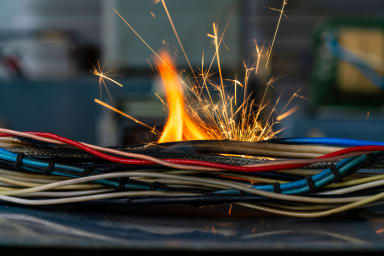
    A house fire that destroys a home theater system, gaming console or desktop computer is a covered peril under an HO-3 policy. Smoke damage to internal components also qualifies as a covered loss.

    shield icon
    Vandalism

    If someone breaks into your home and smashes a TV or destroys a computer, vandalism is a covered peril. The damage must be intentional and caused by another person.

    shield icon
    Lightning and Power Surges

    A direct lightning strike that damages electronics is a covered peril under a standard HO-3 policy. Some policies extend coverage to power surge damage caused by lightning, though surge damage from utility malfunctions is often excluded.

    shield icon
    Windstorm and Hail

    If a windstorm causes a tree to fall through your roof and crush electronics, the damage is covered under the windstorm peril. The loss must result directly from the named peril, not from a subsequent uncovered event.

When Doesn't Home Insurance Cover Electronics?

Coverage may not apply to electronics when damage falls outside covered perils or exceeds policy limits. The situations below outline when exclusions or limitations are more likely to apply.

    errorCheck icon
    Accidental Damage You Caused

    Dropping a laptop, spilling coffee on a keyboard or knocking a TV off a shelf is not a covered peril. Standard homeowners insurance covers sudden and accidental damage from external perils, not accidents caused by the policyholder.

    errorCheck icon
    Wear and Tear or Mechanical Failure

    A computer that stops working because it's old or a TV with a burned-out display is a maintenance issue, not an insurable event. Mechanical breakdowns and gradual deterioration are excluded from standard Coverage C.

    errorCheck icon
    Flooding

    Electronics destroyed by floodwater are not covered under a standard homeowners policy. Flood damage requires a separate flood insurance policy, such as coverage through the National Flood Insurance Program (NFIP).

    errorCheck icon
    Power Surges From Utility Problems

    A power surge caused by a utility company malfunction, not by lightning, is often excluded from standard homeowners policies. An equipment breakdown endorsement may fill this coverage gap.

    errorCheck icon
    Manufacturer Defects

    A device that fails due to a factory defect is a warranty issue, not an insurance claim. Standard personal property coverage does not apply to product defects or design failures.

Covered scenarios apply only if your policy includes personal property coverage. Standard homeowners policies vary — check your declarations page.

What Are Personal Property Sublimits for Electronics?

Personal property sublimits for electronics are caps within a homeowners insurance policy that restrict how much the insurer will pay for certain categories of items. These limits often apply to high-value or theft-prone devices such as computers, cameras or audio equipment, even if the overall personal property coverage amount is higher. If losses exceed these sublimits, the remaining cost is typically out of pocket unless additional coverage is in place.

mglogo icon
CONSIDER SCHEDULED PERSONAL PROPERTY COVERAGE

Scheduled personal property coverage adds protection for high-value electronics by insuring them individually for their appraised value. This coverage often includes broader protection, fewer restrictions and higher limits than standard personal property coverage, making it a practical option for expensive devices.

How to File a Home Insurance Claim for Electronics

Filing a home insurance claim for electronics requires documentation, proof of ownership and an understanding of your policy's valuation method.

  1. 1
    Document the Damage or Loss Immediately

    Take photos and video of damaged electronics before moving or disposing of them. For theft, record the make, model and serial number of each stolen device. Save any police report numbers and note the date and time of the incident.

  2. 2
    File a Police Report for Theft or Vandalism

    If electronics were stolen or intentionally destroyed, file a police report before contacting your insurer. Most insurers require a police report number to process theft and vandalism claims under personal property coverage.

  3. 3
    Contact Your Insurance Company to Open a Claim

    Call your insurer's claims line or file online. Provide your policy number, a description of what happened and your supporting documentation.

  4. 4
    Provide Proof of Ownership and Value

    Gather receipts, credit card statements, warranty cards or product registration emails for each device. Insurers may also accept screenshots of online order history. This documentation determines whether your settlement is calculated using RCV or ACV.

  5. 5
    Review Your Settlement Offer Before Accepting

    Your insurer's adjuster will assess the claim and issue a settlement based on your policy's valuation method, either ACV or RCV. If the offer seems low, you can negotiate or request a re-evaluation. Settlement timelines vary by insurer. After a claim, compare policies from affordable homeowners insurance providers to make sure you have the right coverage going forward.

Electronics Home Insurance Coverage: Bottom Line

Electronics are usually covered under personal property coverage when damage comes from events like fire, theft or vandalism, but payouts may be reduced by sublimits and depreciation. Coverage does not apply to issues like accidental damage, wear and tear or flooding, which often require separate protection or endorsements. Reviewing your policy details helps you understand where gaps exist and whether additional coverage is worth it.

Compare Insurance Rates

Ensure you are getting the best rate for your insurance. Compare quotes from the top insurance companies.

Home Insurance and Electronics: FAQ

These FAQs address common questions about how homeowners insurance covers electronics and where limits may apply.

Does homeowners insurance cover accidental damage I cause to my own electronics?

How does the deductible work for electronics claims?

What coverage adds protection for mechanical failure and power surges?

Are electronics used for a home business covered under standard personal property coverage?

Are electronics damaged during a move covered?

Electronics Coverage in Home Insurance: Related Articles

About Mark Fitzpatrick


Mark Fitzpatrick headshot

Mark Fitzpatrick, a Licensed Property and Casualty Insurance Producer, is MoneyGeek's resident Personal Finance Expert. He has analyzed the insurance market for over five years, conducting original research for insurance shoppers. His insights have been featured in CNBC, NBC News and Mashable.

Fitzpatrick holds a master’s degree in economics and international relations from Johns Hopkins University and a bachelor’s degree from Boston College. He's also a five-time Jeopardy champion!

He writes about economics and insurance, breaking down complex topics so people know what they're buying.


Copyright © 2026 MoneyGeek.com. All Rights Reserved